A Tree Grew Around a Sandstone Head and Kept It
The most-photographed object in Ayutthaya has no recorded date of origin. What is documented is the stone, the roots, and the city they both survived.
The Head in the Roots
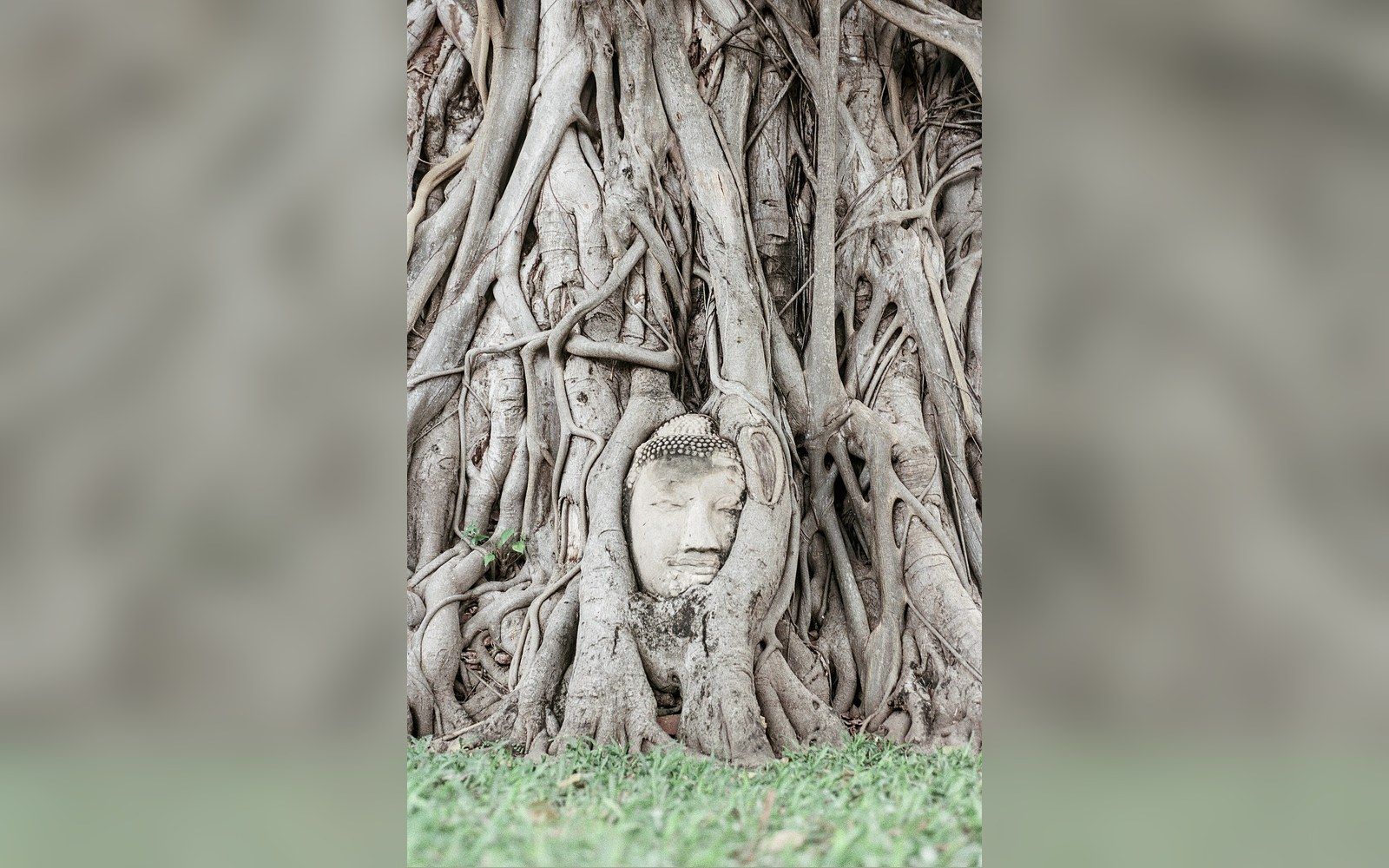
At Wat Mahathat, a sandstone Buddha head sits cradled inside the exposed roots of a bodhi fig tree (Ficus religiosa), the roots having grown around it over what is estimated to be several centuries. The head faces slightly downward, its expression composed — lidded eyes, the faint trace of a smile — while the grey-brown roots press in from each side like hands that closed slowly and forgot to let go.
Nobody recorded when the head fell. Wat Mahathat, one of the oldest and most important temples within the old royal capital, was devastated when Burmese forces sacked Ayutthaya in 1767; the complex was left in ruins, and much of its statuary was toppled, decapitated or carried off. The head almost certainly came down then, or in the slow structural collapse that followed abandonment. It rested on the ground. The tree, already growing nearby or seeding itself later, sent its roots outward along the surface of the soil as fig trees do, and the roots eventually enclosed the stone.
The Ayutthaya Historical Park, administered by the Fine Arts Department of Thailand, was designated a UNESCO World Heritage Site in 1991 along with the surrounding complex of ruins, and it is managed as an archaeological site rather than an active place of worship. Visitors are expected to kneel or crouch when photographing the head, keeping the face higher than their own — a quiet protocol enforced by site staff, reflecting the image's continued sacred status despite its circumstances.
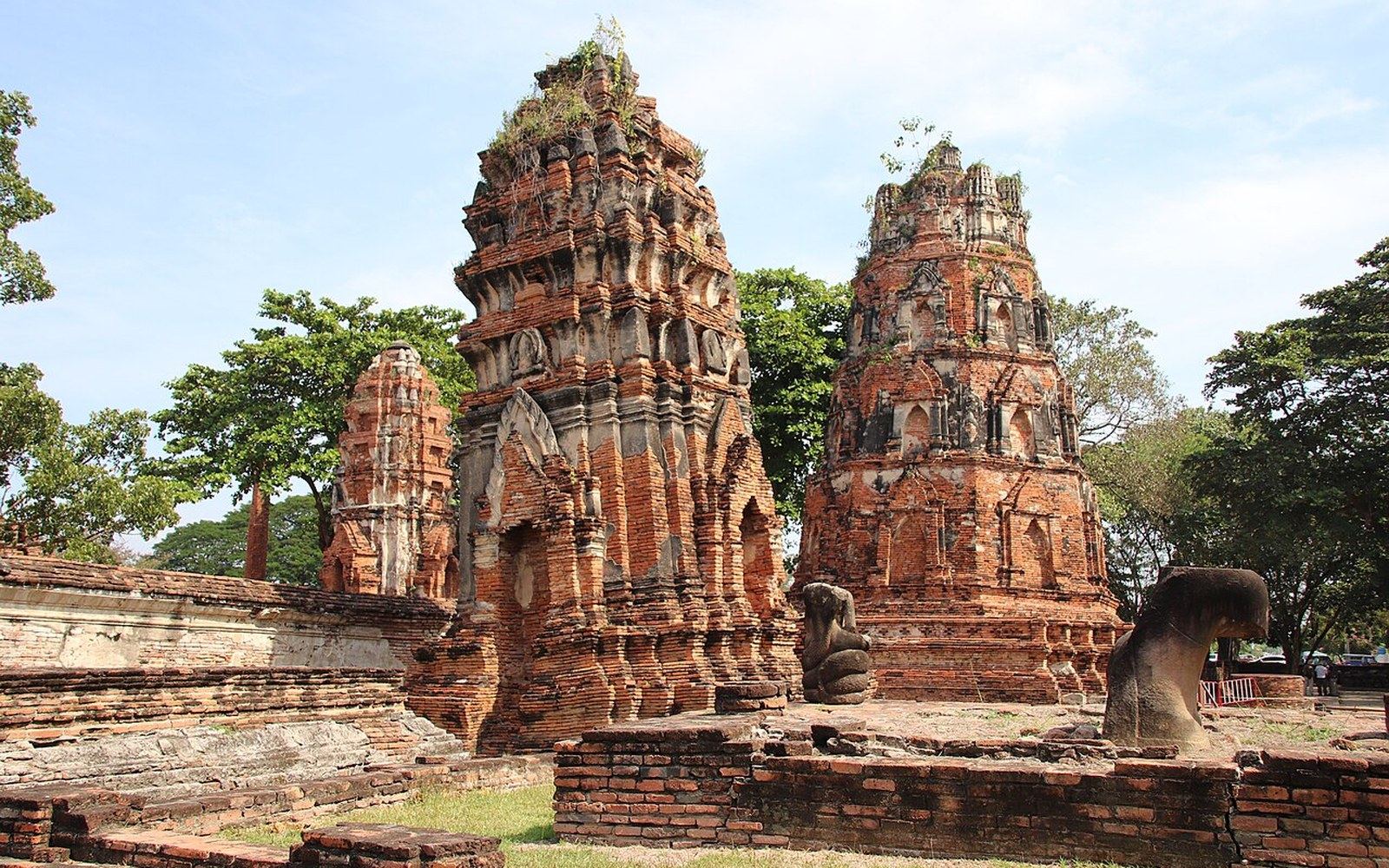
What the tree actually did is arboreal routine: a fig's surface roots follow whatever is on the ground. That the roots closed around a face rather than a piece of broken wall is what stopped anyone from moving the head, and what eventually made it the image most people associate with Ayutthaya more readily than its intact prangs or its kilometre of brick foundations. The stone was preserved by accident, in the way ruins generally are — not through intention but through the particular arrangement of time and neglect and a root system indifferent to iconography.
Chronology
- 1767Burmese forces sack Ayutthaya; temple complex destroyed
- Subsequent decades/centuriesbodhi fig roots gradually enclose the fallen head (undated)
- 1991Ayutthaya Historical Park designated UNESCO World Heritage Site
The head is sandstone. The tree is estimated to be several hundred years old. The date the head fell remains unrecorded.