A commuter service that still beats the traffic
The Chao Phraya express boats run to flag colours rather than a route number, and for a stretch of the city they remain the fastest way north.
Flags before timetables
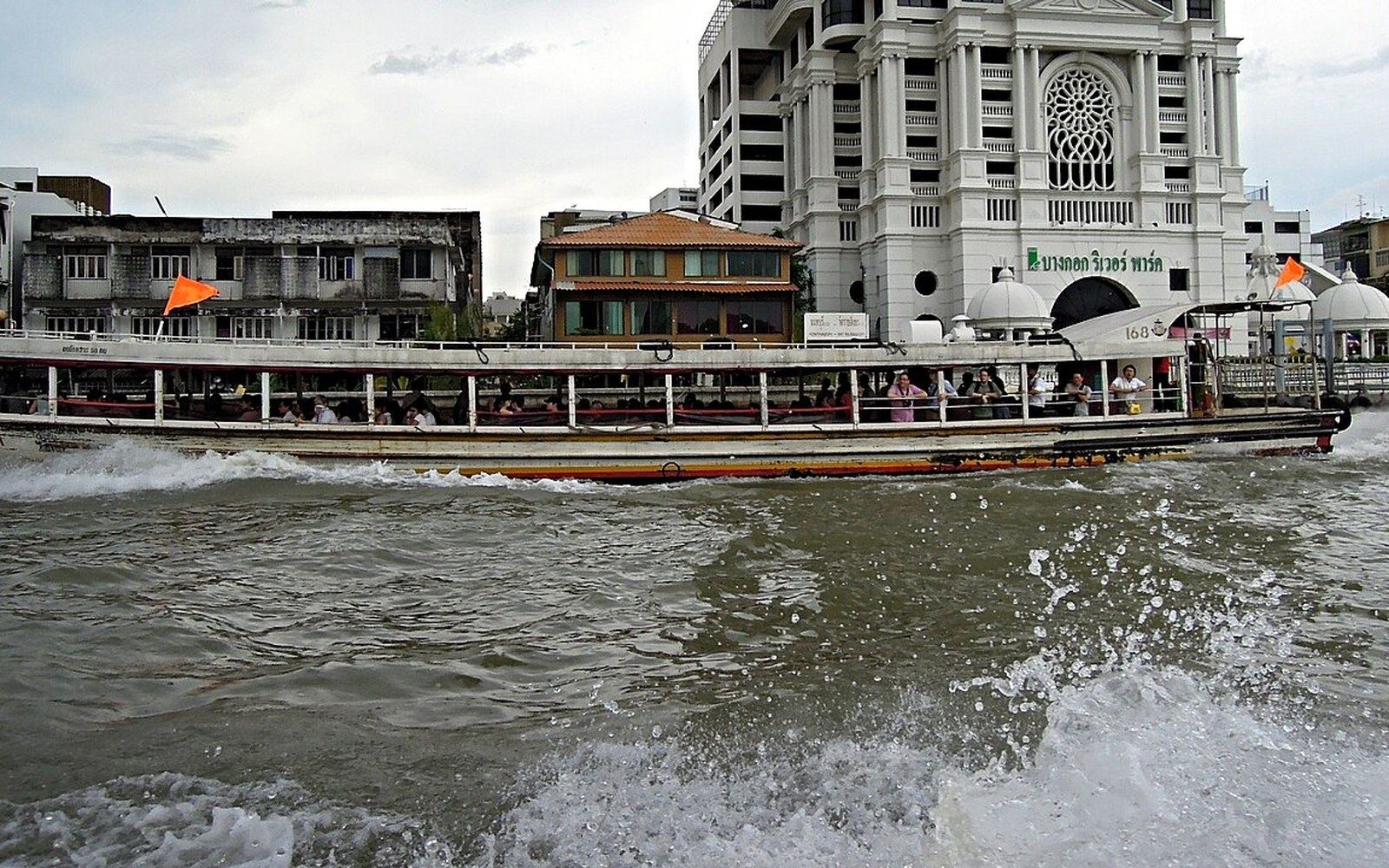
The Chao Phraya is a working river. Barges move cement and rice on it; cross-river ferries thread between them; and the express boats — reua duan, fast boats — have been carrying commuters and traders between the city's piers since the Chao Phraya Express Boat Company formalised the service in 1976. The system predates every elevated rail line in Bangkok and, for the corridor between Sathorn and Nonthaburi, it still does the job faster than road traffic on most weekday mornings.
The key to reading it is not a route number but a flag. Boats flying an orange flag run express, skipping the smaller piers; yellow-flag boats stop more often along the central section; the no-flag local is the slowest of all, calling at every pier from Phra Pradaeng in the south to Nonthaburi in the north. A blue-flag tourist line, shorter and more regular than the rest, was introduced later and anchors itself to the piers most visitors already know — Sathorn, Tha Tien, Phra Athit. Each flag colour represents a different trade-off between speed and access, and reading them correctly is the practical skill the river demands.
The piers the city built around
The piers themselves are layered into the city's biography. Tha Tien sits at the foot of Wat Pho; cross the river from it and the silhouette of Wat Arun fills the view from the landing stage. Phra Athit serves the old Banglamphu quarter and Khao San Road beyond it. Sathorn — officially Central Pier — is where the tourist route meets the BTS Skytrain at Saphan Taksin station, which is why it crowds so reliably. The pier at Oriental, beside the Mandarin Oriental Hotel on Charoen Krung, marks the old riverfront of the foreign trading quarter that made the east bank of the Chao Phraya the commercial edge of nineteenth-century Bangkok.
Further north, the river passes Thonburi on the west bank — the capital for a brief period after Ayutthaya fell in 1767 — before the piers tighten into the older residential neighbourhoods upstream. The Nonthaburi market pier at the northern terminus is where the express boats turn around, the city having ended more or less and the river having widened enough that the far bank looks genuinely provincial.
Why it still works
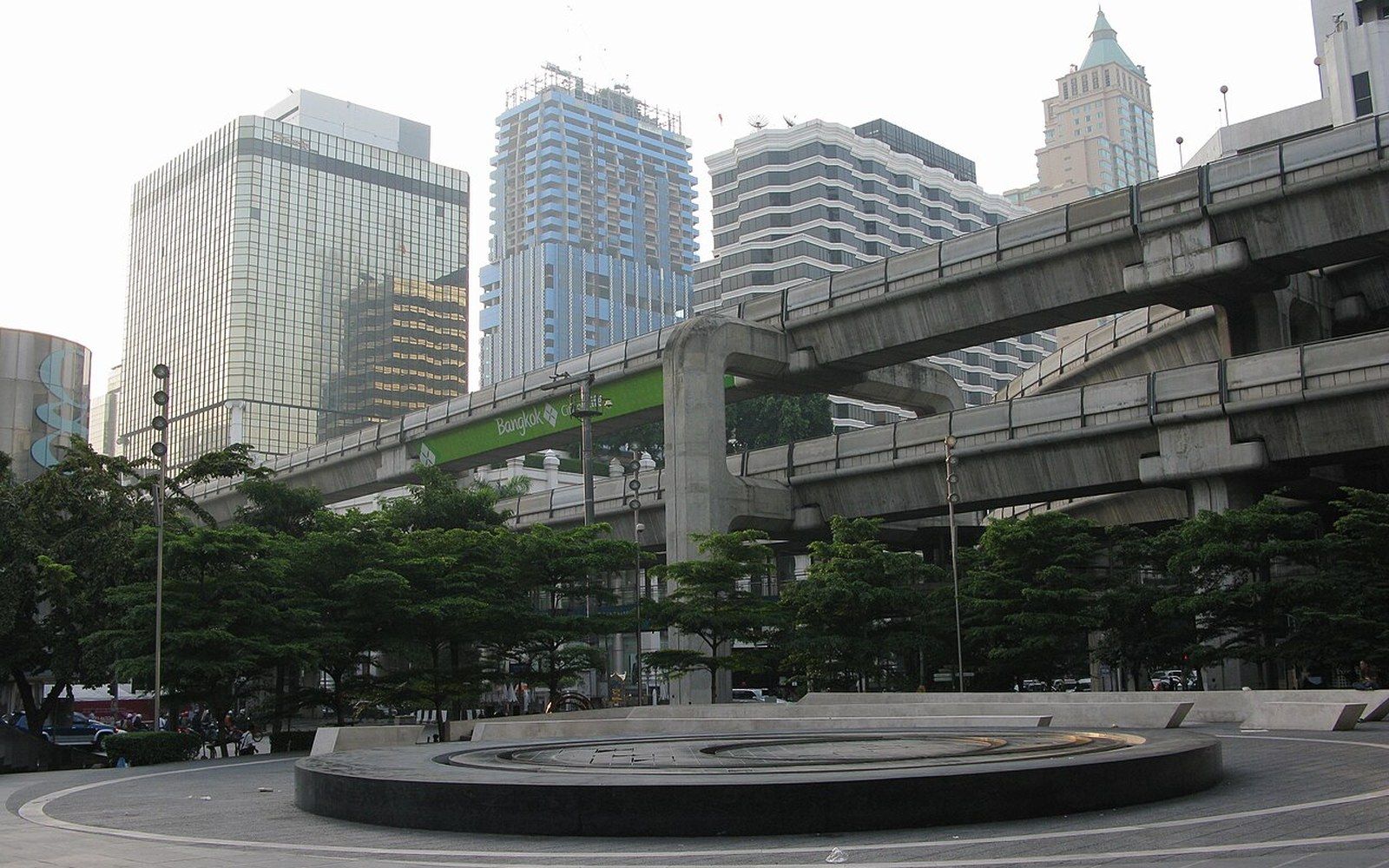
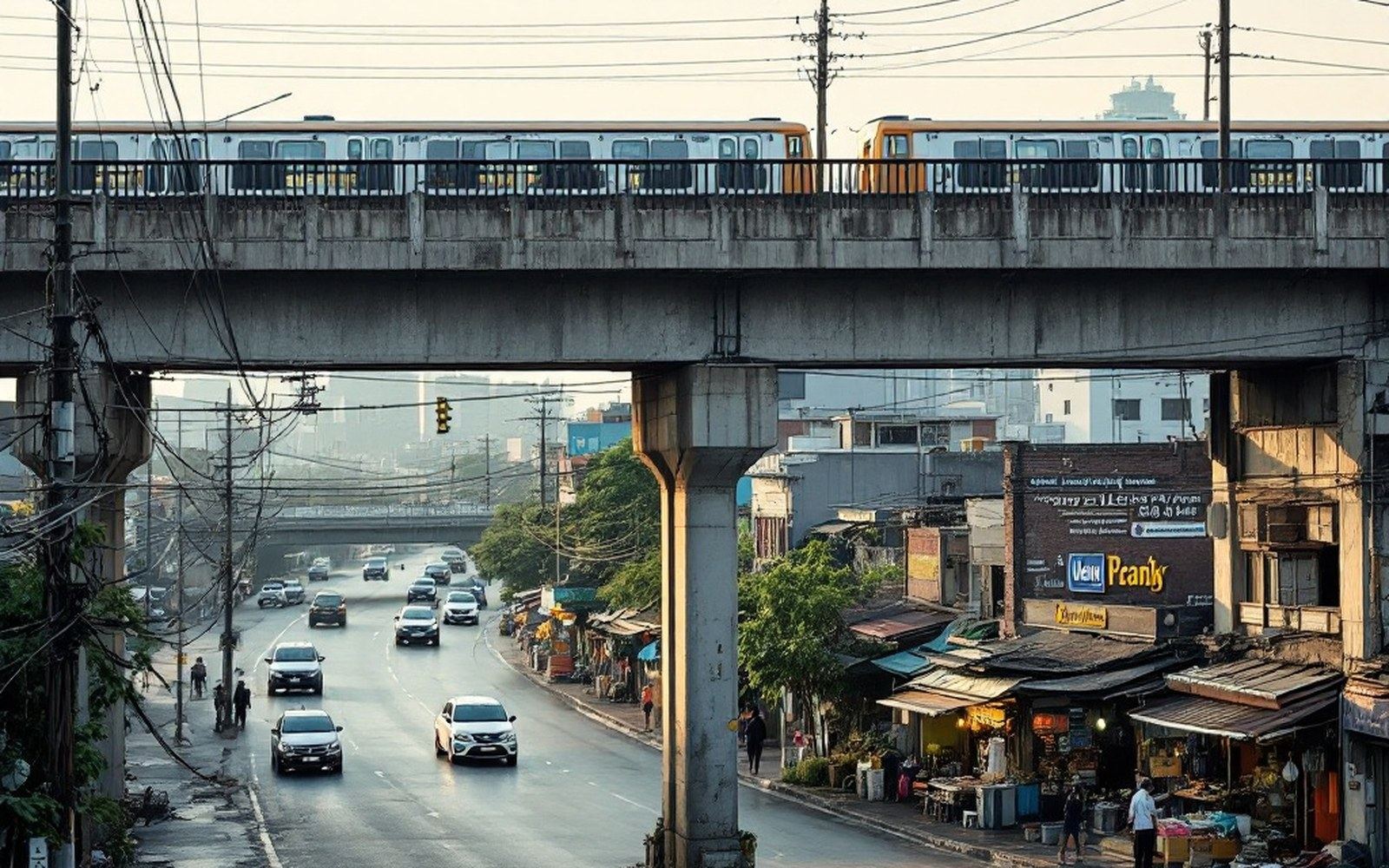
The Chao Phraya Express Boat service survives as a fast commuter option because the river has no traffic lights, no intersections and no congestion in the ordinary sense. A city that took decades to build the BTS Skytrain above its avenues — because the alluvial ground was too soft for conventional underground construction — had already been using its main waterway as a natural transit corridor for centuries. The express boats do not need signalling infrastructure or tunnelling engineers; they need piers, flags and engines powerful enough to fight the current.
The current is real. The Chao Phraya drains a basin covering much of northern and central Thailand, and the water moves with purpose, especially in the wet season when the river runs high and brown and the express boats leave a white wake that rocks the longtail taxis well out from the bank. Boarding is correspondingly abrupt — a few seconds at the pier, a crew member pulling on a rope to hold the stern in, and then off. Regular users step on and off without breaking their stride. First-time passengers who hesitate usually make the next boat.
What the express service cannot do is reach the neighbourhoods the railway and sky train serve inland. It is a single line — the river — and the river bends as rivers do. But along that line, flag colours and all, it remains an honest piece of working infrastructure: cheap, fast, and pointed roughly north.