The Floating Market Outlived the Trade That Made It
Damnoen Saduak looks like a postcard because it is one — but the klong it sits on was dug for commerce, not cameras.
The Canal Came First
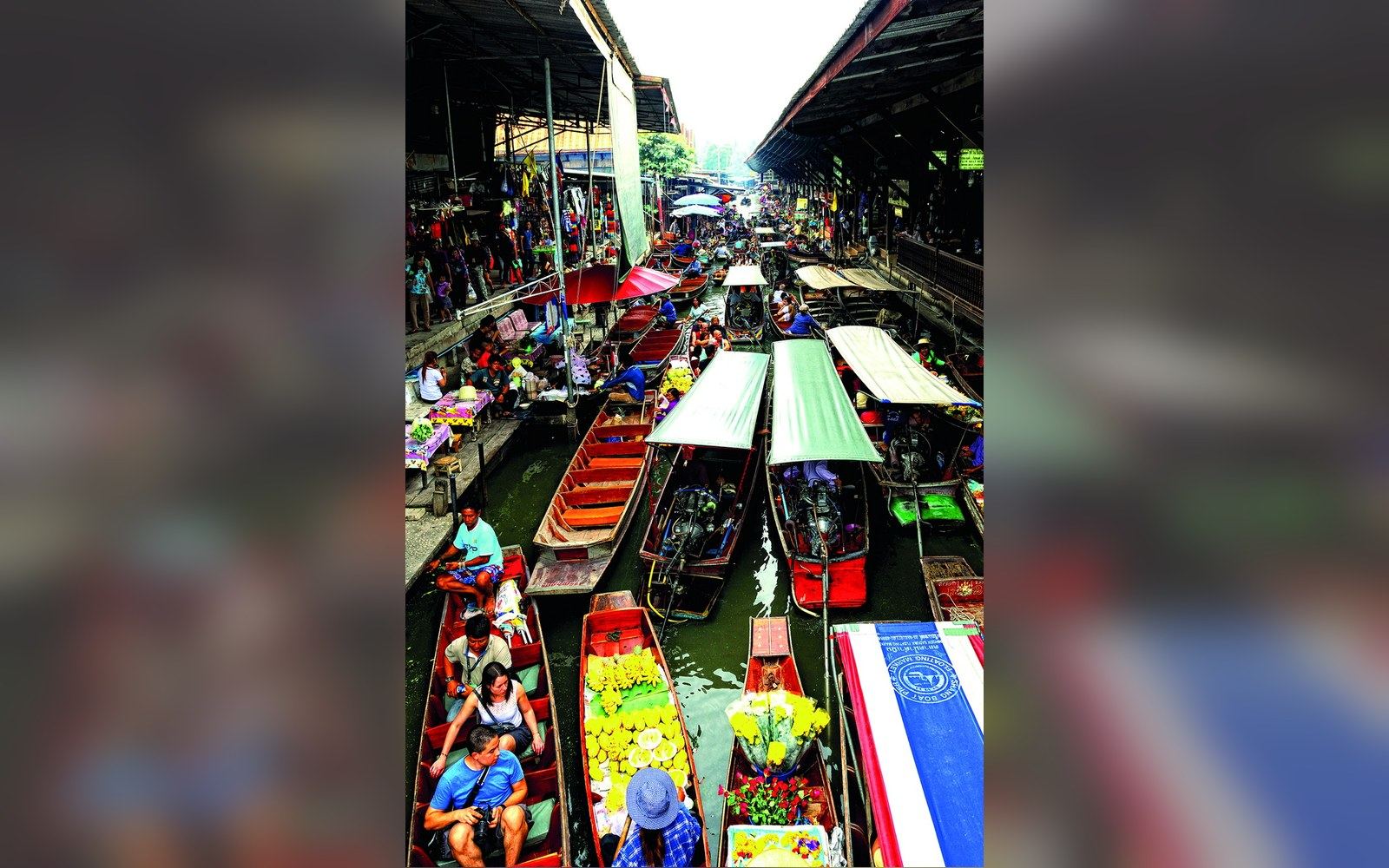
Damnoen Saduak was not built as a spectacle. The canal connecting the Mae Klong and Tha Chin rivers in Ratchaburi province was excavated in the 1860s on the order of Rama IV (King Mongkut), as part of a wider programme to open the central plains to trade and settlement. Smallholders moved in along the banks, fruit orchards spread across the alluvial land, and the market that formed on the water was simply the most practical place to exchange goods — wooden boats loaded with pomelo, rose apple, galangal, and morning glory, sellers paddling to buyers because the roads had not arrived yet.
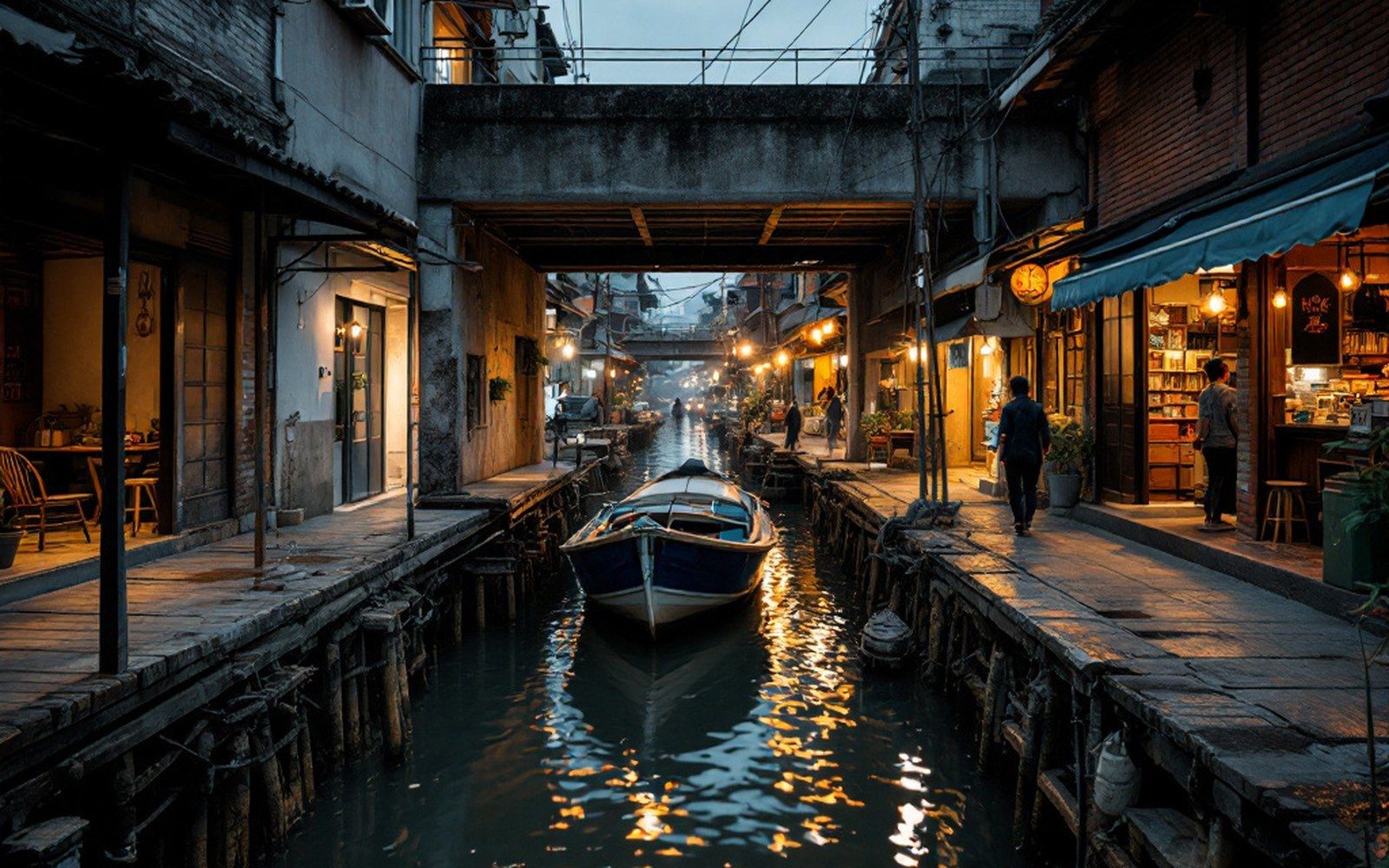
For most of the twentieth century Damnoen Saduak ran on that same logic. The klongs — canals — were the infrastructure. Women in broad-brimmed bamboo hats sold directly from their boats or from low wooden platforms built over the water, and the transaction was unremarkable: local produce moving to local buyers at the start of the day.
What Tourism Changed and What It Did Not
Roads came, refrigerated lorries came, and the market's original economic function quietly migrated elsewhere. By the time Damnoen Saduak appeared in the 1974 James Bond film The Man with the Golden Gun, it had already begun its second career. The image was irresistible, the photography was easy, and the coaches followed.
What tourism changed is visible: souvenir goods crowd the platforms, vendors sell cooked food from their boats to visitors rather than to neighbours, and the narrower inner channels can feel congested in the mid-morning rush. What it did not change is more interesting. The produce boats still move through the same waterways in the early hours, the orchards behind the canal banks still supply the central market at Ratchaburi, and the physical layout of the market — boats clustering at canal junctions, sellers in identical hats, the low thatch of the waterside sheds — looks almost exactly as it did in photographs from the 1970s held in Thai provincial archives. The form survived because the form is efficient, not because it was preserved.
Damnoen Saduak is roughly ninety kilometres southwest of Bangkok, deep enough into Ratchaburi province that reaching it is a committed decision. The commitment is part of the point. A market that takes effort to reach has not been swallowed by the city, and the klong it occupies — dug on royal instruction to move mangoes and pomelos — still smells of both.
Related
Where the city buys things, and when