Khao soi is a Chiang Mai dish, and the north argues about it
A curried noodle soup that arrived from across two borders, then stayed long enough to become the dish northern Thailand argues hardest about.
What it is and where it comes from
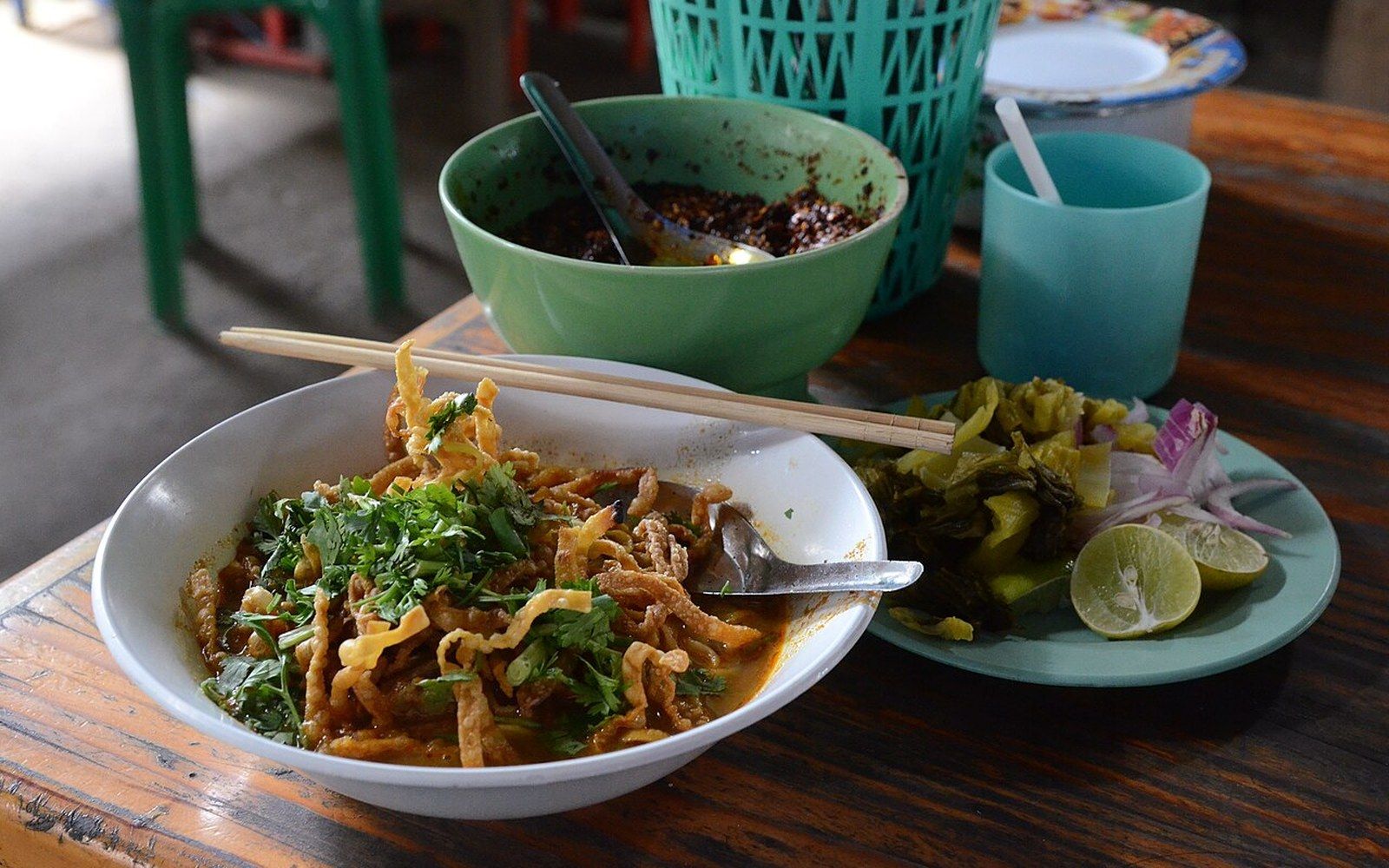
The bowl arrives layered: a golden-orange coconut curry broth, egg noodles soft-boiled in it, a tangle of deep-fried crisp noodles balanced on top, and a separate plate carrying pickled mustard greens, shallots, lime, and chilli oil for adjusting. The broth is fragrant with dried spices — coriander seed, turmeric, dried chillies — and thickened with coconut milk rather than the fish-sauce-forward broths of the central plains. It is khao soi, and outside the north of Thailand it barely existed in Thai restaurants until perhaps the last two decades.
The lineage crosses borders. The dish carries clear structural similarities to Burmese ohn no khao swè — a coconut-milk noodle soup that moves through Shan State and into the Kayah and Chin regions — and to versions found in Yunnan province in southern China, where Muslim Hui traders carried dried spice combinations along the same routes the trade caravans used. The name itself is thought by most food historians to derive from a Yunnanese term for cut noodles. The path into what is now northern Thailand almost certainly ran through the old Shan and Yunnanese trading networks that connected Chiang Mai with Kengtung and beyond from at least the mid-nineteenth century, when Chiang Mai was a tributary state of Siam and its markets were thick with Yunnanese Muslim merchants, known locally as Chin Haw.
That trading connection matters because the spice profile of khao soi is not straightforwardly Thai Buddhist cooking. The Chin Haw carried dried spice pastes that used no shrimp paste and no pork, and early versions of the dish in the north were halal. Today, Chiang Mai's Muslim community, concentrated in the area around the old Ton Lam Yai market and the Baan Haw mosque, still makes khao soi in a form closer to that origin — with a slightly leaner broth and beef or chicken only. The majority Thai-Buddhist version has diverged, typically using chicken drumsticks or legs braised in the broth until the meat starts to pull from the bone.
The argument the north has with itself
The version most visitors encounter in Chiang Mai is coconut-milk based, which is not universal. Chiang Rai, about 180 kilometres north, has a strong tradition of khao soi without coconut milk — a clear broth with a different spice logic, closer to the Shan and Burmese antecedents in texture if not in colour. Chiang Rai cooks argue their version is older and less adulterated; Chiang Mai cooks tend to find the Chiang Rai version thin. The Lanna heartland, which encompasses both cities and the surrounding provinces, does not settle the debate easily: what is called khao soi in Mae Hong Son or Phrae can differ again, sometimes to the point where the two dishes share only the name.
The disagreement is not trivial food-tourism commentary. It reflects the way Lanna culture — the civilisation centred on Chiang Mai from the thirteenth century until the region's full administrative integration into Siam under Rama V in the 1890s — absorbed influences from multiple directions over a very long time, and then was partially homogenised in the twentieth century as central Thai norms spread through national infrastructure, schools, and eventually tourism. The coconut-milk khao soi that became famous is in part a product of that popularity pressure: it photographs well, it is rich in a way that registers quickly, and it survived the export to Bangkok menus that other, less photogenic northern dishes did not.
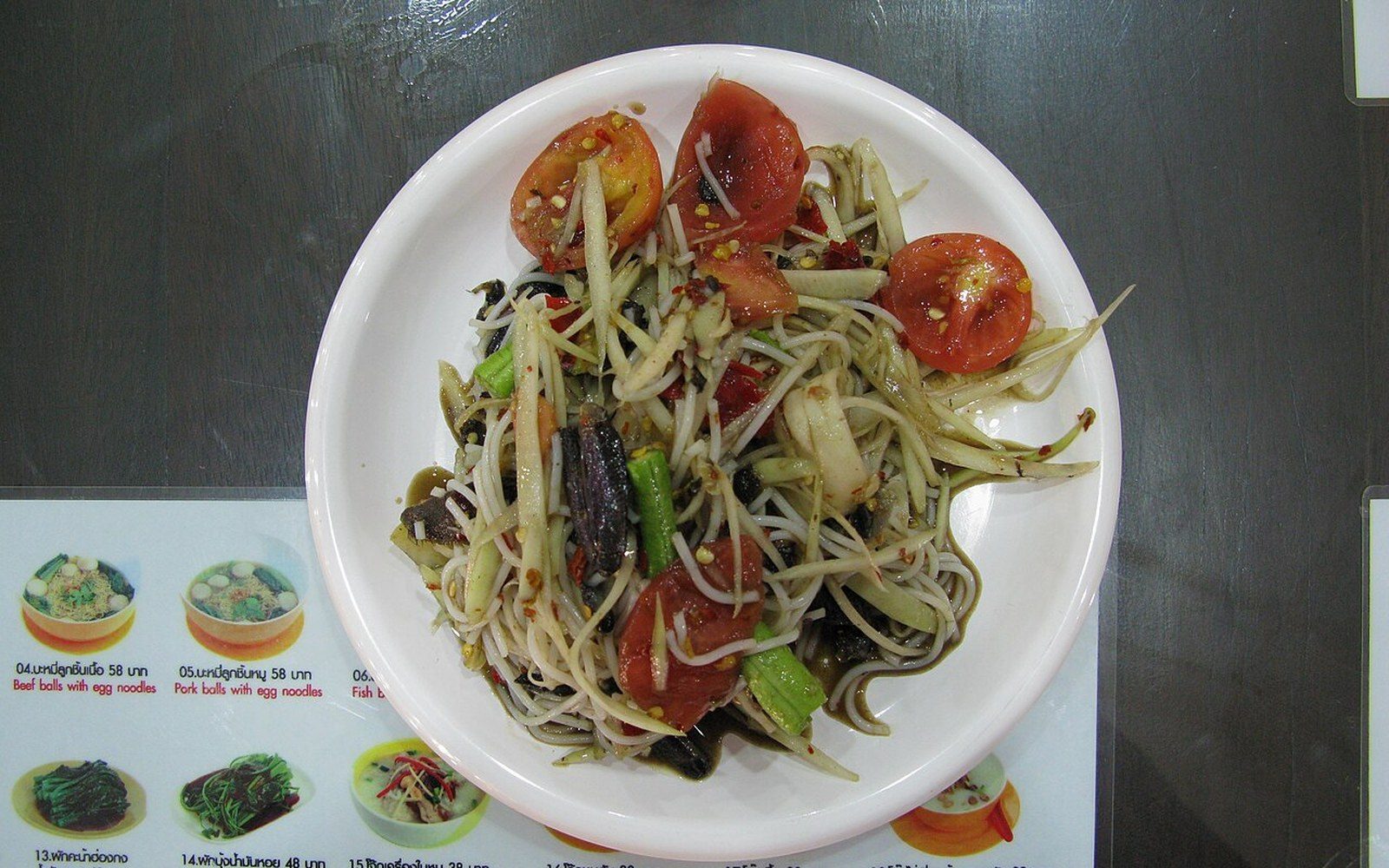
The dish the south and Bangkok know is therefore a selective version of a more varied northern tradition. Som tam, the papaya salad that followed Isaan labour into the capital, underwent something comparable — the Isaan version multiplied into dozens of regional types while a single Bangkok-legible form became nationally dominant. The pattern repeats: a regional food that travels gets simplified.
The bowl in practice
The egg noodles used are wheat-based, which already sets khao soi apart from most of the central Thai kitchen, where rice noodles prevail. Wheat noodles in northern Thailand trace back to the same Yunnanese and Burmese trading culture: wheat grows better in the upland north than on the central plains, and Chinese Muslim cooks brought wheat-noodle technique with them. The crisp noodles on top are not a garnish in the decorative sense but a textural counterpoint that the dish is built around — the contrast between soft and crunchy inside a single spoonful is the point, and a bowl where the fried noodles have gone soggy in the broth is a bowl that waited too long on the pass.
The condiment plate matters more than it might appear. The pickled mustard greens — phak gat dong in northern Thai usage — cut the richness of the coconut broth with acid the way lime juice cuts a tom yam. Shallots add a raw bite. Chilli oil (sometimes a dried-chilli-in-oil paste) adjusts the heat upward from the broth's baseline. A cook who assembles the bowl will have calibrated the broth to a middle register, expecting the diner to tune it. Eating khao soi without touching the condiments is technically possible but structurally wrong.
Chiang Mai has developed a cluster of khao soi restaurants that have acquired reputations lasting decades — establishments run by families who have refined their curry paste recipes over generations and source their noodles from specific makers. That specificity — the particular balance of dried spices in the paste, the fat content of the coconut milk, the braising time for the chicken — is where the real argument lives. No two serious khao soi cooks in Chiang Mai agree on the proportions, and each would say the others are wrong about at least one thing. It is the kind of productive disagreement that keeps a dish alive.
Related
The food is regional and the regions argue