Chinatown eats at night because it worked all day
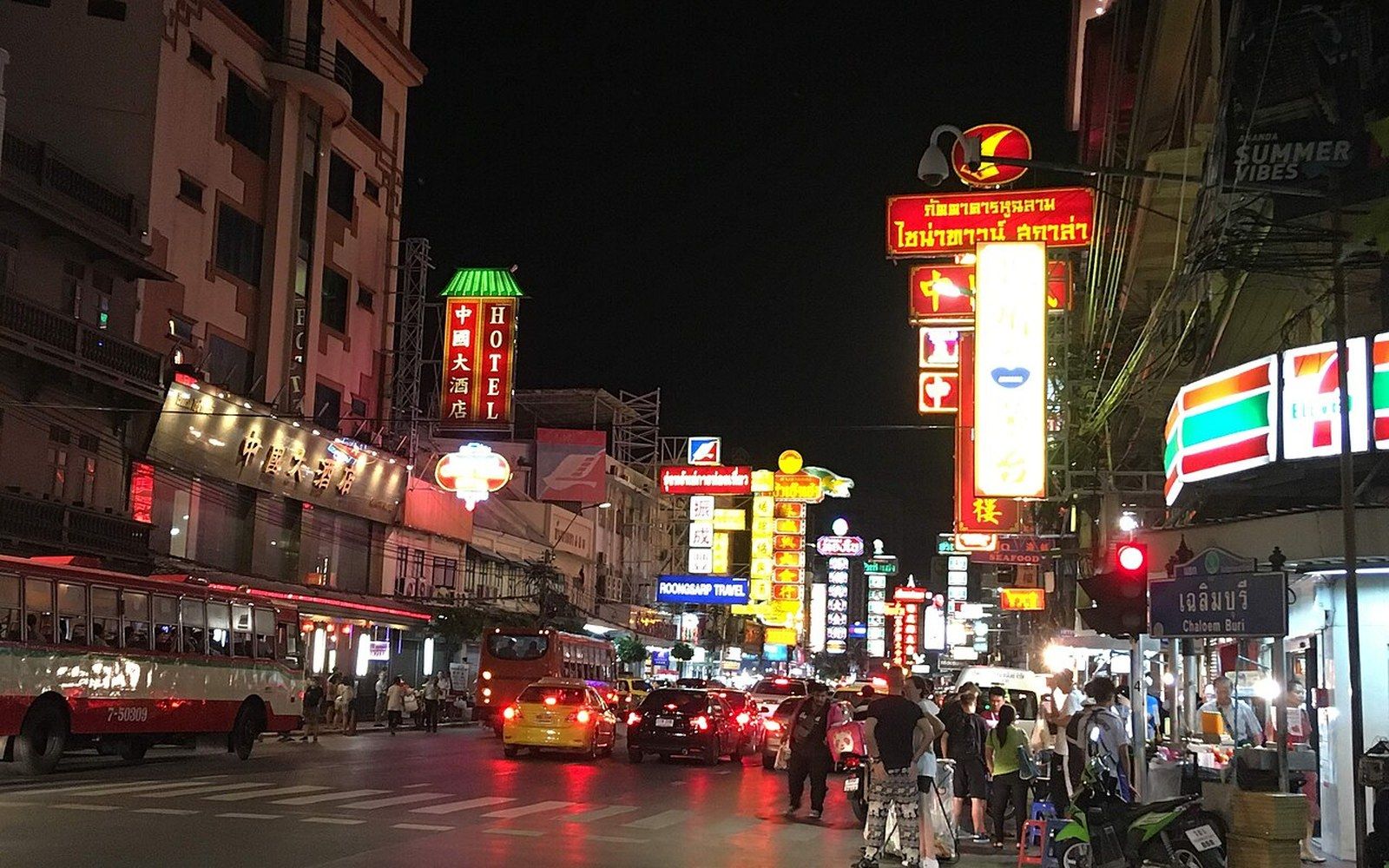
Yaowarat's street food economy runs after dark, on a street laid out in the nineteenth century for a trading community that is still there.
The road and who built it
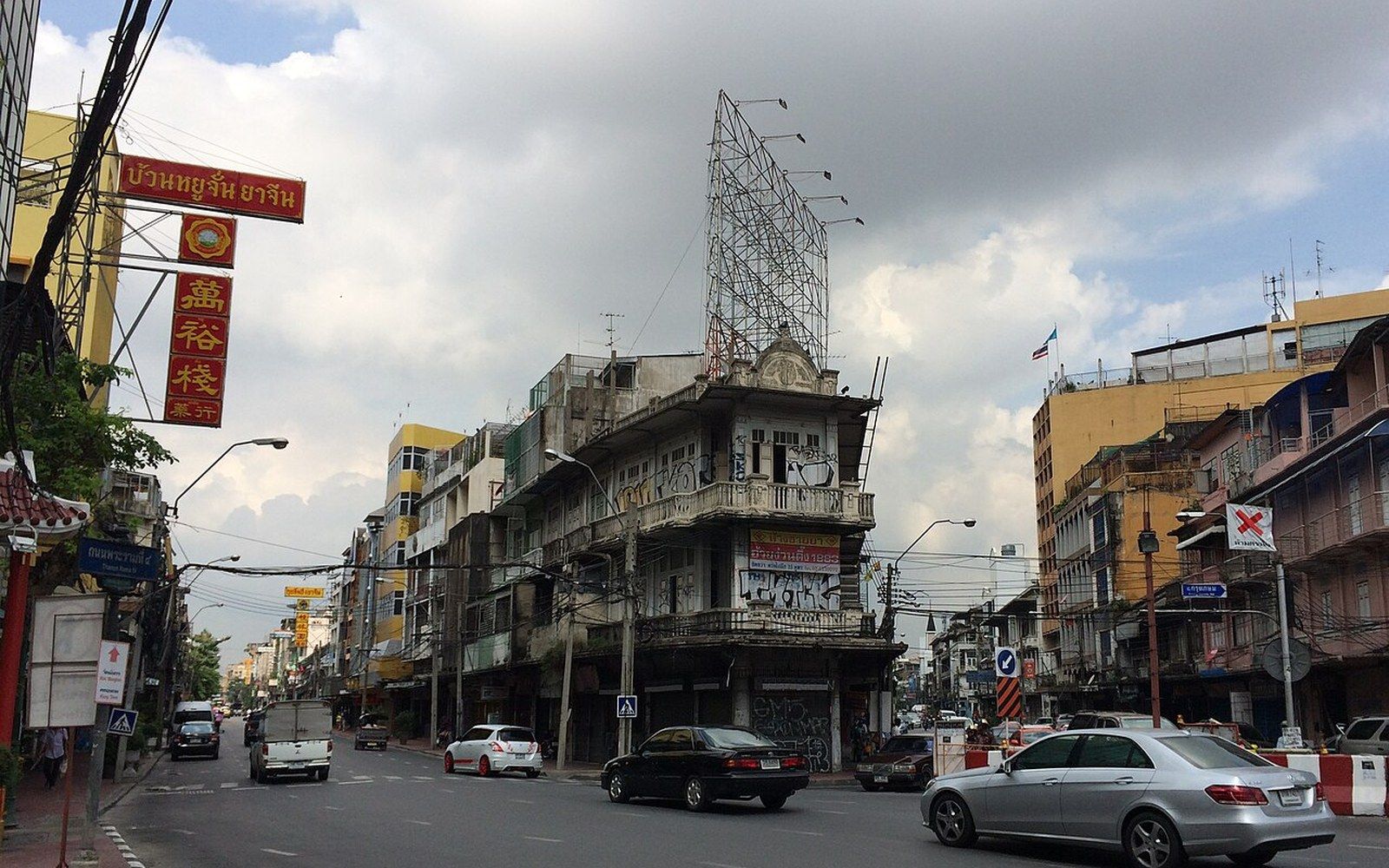
Yaowarat Road cuts through Samphanthawong district in a slight diagonal, and the angle is not accidental — it follows the logic of a Teochew trading community that had already been established on the east bank of the Chao Phraya for decades before the road was formalised in the late nineteenth century. The Chinese migrants who settled here were predominantly Teochew, from the coastal prefecture of Chaoshan in Guangdong province, and they came in numbers that made Bangkok's Chinatown one of the largest in Southeast Asia. The road itself, gold-shop fronts and all, is essentially their infrastructure: a commercial spine built to serve a community that moved goods, processed food, and stored merchandise in the shophouses — the two- and three-storey buildings whose ground floor is the shop and whose upper floors are the home — that still line it on both sides.
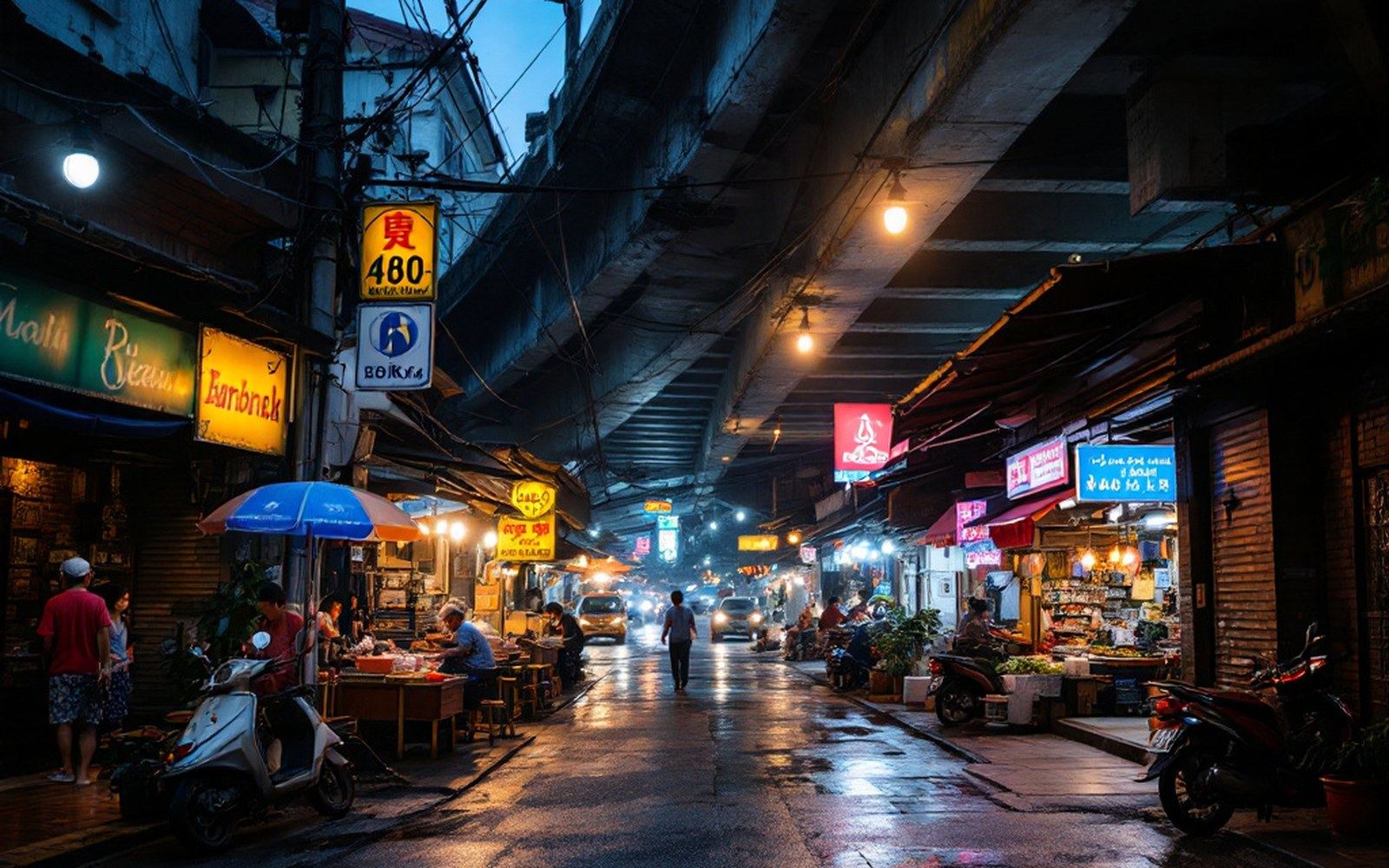
The shophouse (hong thaew in Thai-Chinese usage) is the structural logic of the whole neighbourhood. Walk any lane off Yaowarat proper — into Soi Nana, Soi Mangkon, or back toward the old Talat Noi quarter — and the same form repeats: narrow frontage, deep plan, stairs at the rear, a shuttered front that rolls up at opening time and rolls back down when the day is done. The trading families that built them treated ground floor and upper floor as a single economic unit, and many still do. What changed over the twentieth century was not the form but the inventory: dried goods, medicinal herbs, gold, marine products, car parts, funeral supplies — Yaowarat has sections devoted to each, and the sections are not random but historically sedimented, one trade following another as the community's economy matured.
The gold trade is the most visible. Rows of gold shops — their signs in both Thai and Chinese characters — face the street along the central stretch of Yaowarat, and they are working shops, not display cases. Gold here is traded by weight at the day's standard price, a practice rooted in the community's need for portable, liquid wealth in the nineteenth and early twentieth centuries, when banking infrastructure in Siam was thin and trust ran through kinship networks. The gold shops open early and close before dark. By the time the food stalls go up, the shutters are down.
When the street changes
The shift happens in the late afternoon. The wholesale traders pack their scales, the delivery motorcycles thin out, the narrow footpaths that have spent the day blocked by sacks and pallets gradually clear. Then the carts appear, the gas canisters are connected, and Yaowarat becomes a different kind of place — still loud, still crowded, but rearranged around a different appetite.
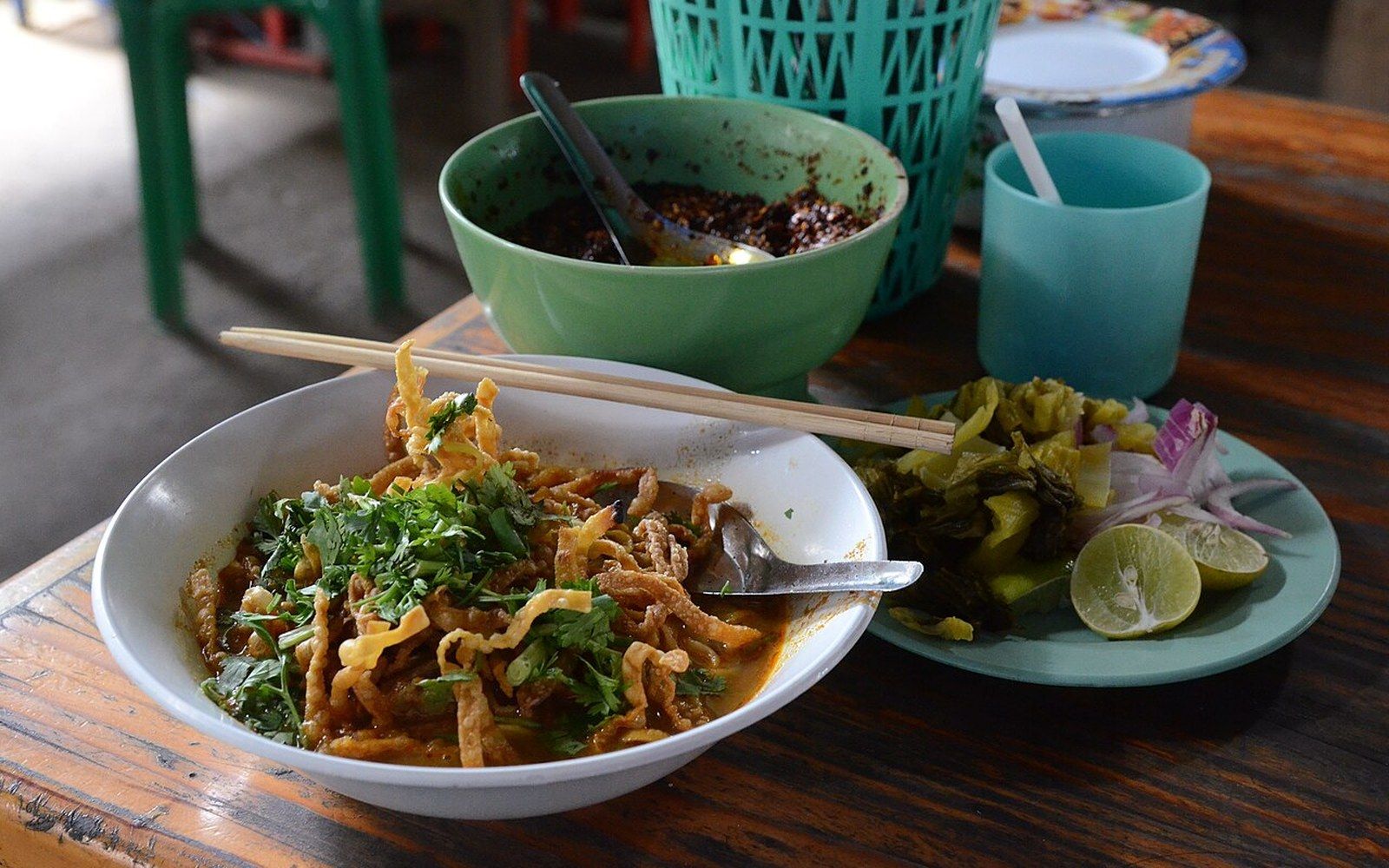
The cuisine is Thai-Chinese, which is not a diplomatic compromise but a genuinely distinct thing. Teochew food is mild by the standards of the Thai kitchen, built around steamed and braised preparations rather than the chilli heat of the northeast or the coconut richness of the south, and it shaped Bangkok's palate in ways that are easy to overlook because they long ago disappeared into the mainstream. Jok (rice congee), kuay chap (rolled rice noodles in a dark pepper broth with braised offal), khao man gai (poached chicken over rice in chicken fat), pad see ew (stir-fried flat noodles): all of these dishes are eaten across Bangkok as ordinary street food, and all have Teochew or broader Chinese lineage. In Yaowarat, they are served in their home neighbourhood.
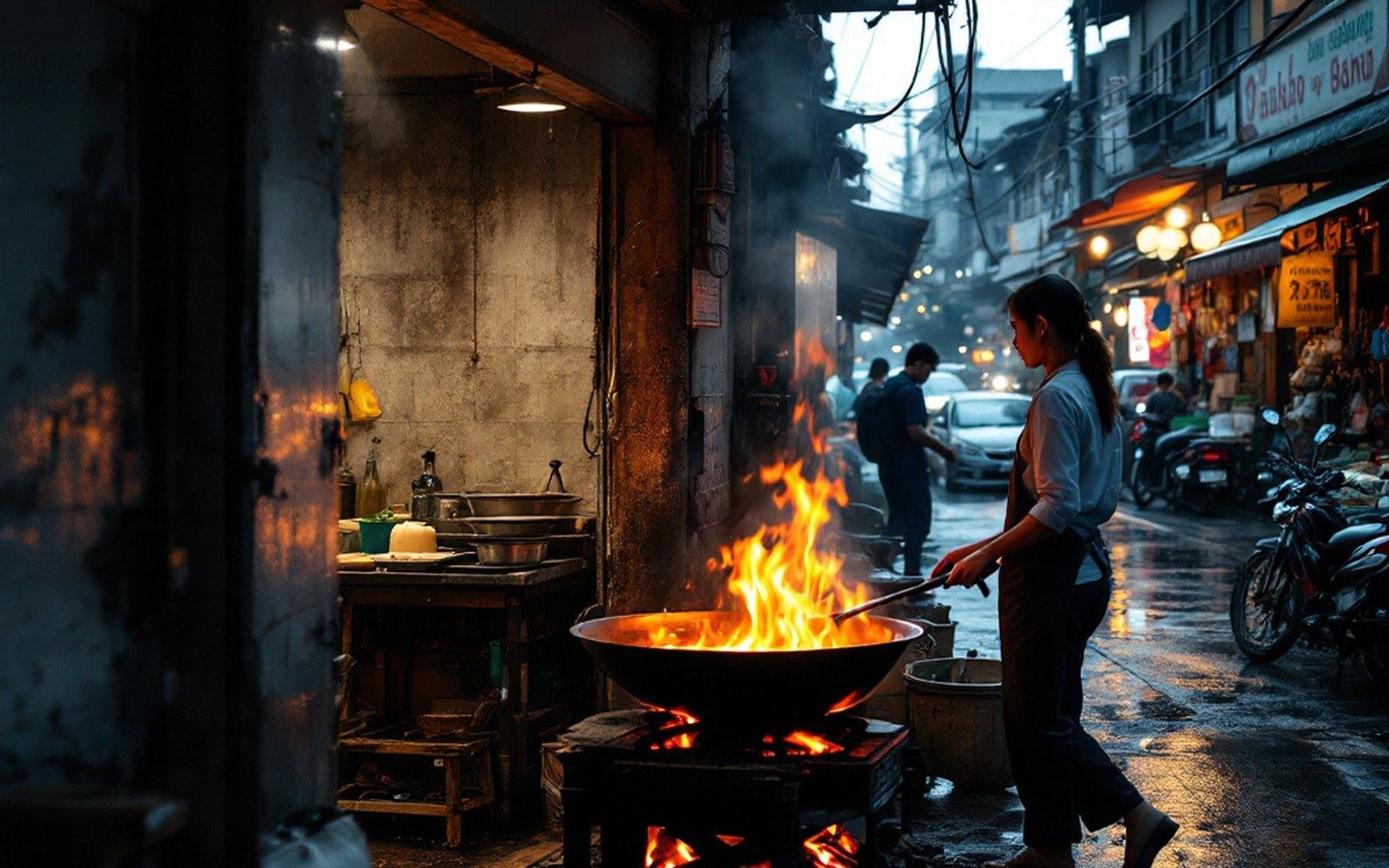
A few dishes have become specifically associated with the street. Crab omelette cooked in a hot wok with considerably more oil than caution — the dish associated with Jay Fai, whose shophouse kitchen a short distance away in Phra Nakhon district operates in the same Sino-Thai culinary tradition — belongs to this lineage: the wok technique is Chinese, the crab is Gulf of Thailand, and the treatment is Bangkok. On Yaowarat itself, the cluster of seafood restaurants between the main road and the river serves what amounts to a working-class luxury, the kind of meal the trading families ate on good days: whole steamed fish, stir-fried clams with roasted chilli paste, river prawn in broth. The price points have moved since then but the logic has not.
The dessert economy runs parallel. Egg tarts, mango sticky rice sold from flat trays, grass jelly in syrup, red bean soup, and bua loy (glutinous rice balls in sweetened coconut milk) appear from carts that do not serve savoury food and will pack up independently when they sell out. The old sweet shops — some of them running in the same premises since the mid-twentieth century — sell tang (Chinese-style confectionery) from glass jars and refrigerated cases. These are not tourist concessions. The customers are mostly local, and the purchases are often made in bulk, for merit-making offerings at the neighbourhood's temples.
The temples and the smell of incense
Wat Traimit, at the eastern end of Yaowarat Road, houses a gold Buddha image of substantial size — cast in solid gold and weighing roughly five and a half tonnes — that was discovered, according to documented accounts, when an older plaster casing cracked during a move in 1955. The image's origins are debated but its presence anchors the neighbourhood's religious life. Wat Mangkon Kamalawat (also called Wat Leng Noei Yi) is the major Mahayana Buddhist temple on the road itself, and on any evening its forecourt is active: incense sticks burning in stone holders, offerings of fruit and flowers arranged before images of Guanyin and other bodhisattvas, older residents moving through a devotional rhythm that predates both the food stalls outside and the city beyond.
The san phra phum — the small spirit house placed outside a building to accommodate the spirit displaced by its construction — appears in Yaowarat too, though here it often shares a courtyard with Chinese altar furniture and offerings of a different tradition. The neighbourhood has layered its devotional life as it has layered everything else: pragmatically, in depth, without much interest in resolving the distinctions.
Yaowarat Road's place in Bangkok's history is well enough documented that it appears in accounts of the city's formation as a trading capital. The Teochew presence in Bangkok was recognised by the Siamese court and granted formal commercial standing in the early Rattanakosin period; the community's capacity to move rice between the interior and the port made them essential, and the neighbourhood they built reflects that position — not grand, but deeply functional, and still functioning, long after the city grew up around it and the street food queues formed in the dark.