Isaan Sent Its Labour to Bangkok and Its Food Came Too
The northeast plateau is home to about a third of Thailand's people and, for decades, it has fed Bangkok as well — not as cuisine, but as daily fuel.
The Migration That Moved the Kitchen
Isaan — the broad, dry plateau that occupies Thailand's northeastern corner, roughly the size of England and Wales combined — has been sending workers south and west since the mid-twentieth century. The construction booms that remade Bangkok from the 1960s onward drew heavily from its villages. So did the factories of the Eastern Seaboard, the hotels of the tourist strips, and the domestic workforce of the capital's middle-class households. By the time the BTS Skytrain was rising on its viaduct above Bangkok's avenues in the late 1990s, a substantial portion of the labour doing the work was from Udon Thani, Khon Kaen, Ubon Ratchathani and the dozens of provinces between them.
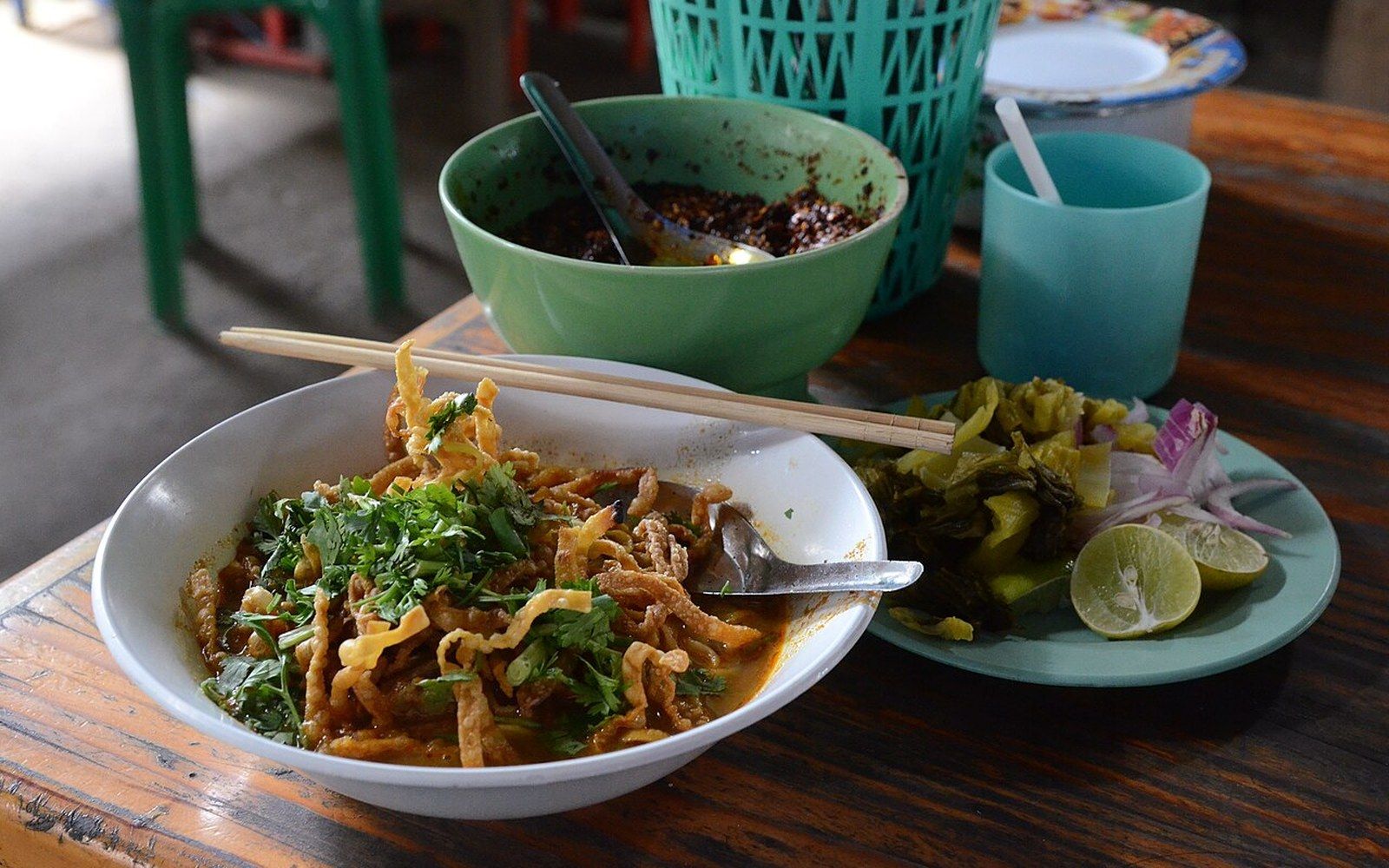
Workers move; food moves with them. The cooks who set up on pavements at construction sites and in market lanes around low-rent districts were feeding their own communities — people who wanted the taste they had grown up with, not a softened version of it. The result was that Isaan food did not arrive in Bangkok as a novelty. It arrived as a necessity, and it spread outward from there.
What the Food Actually Is
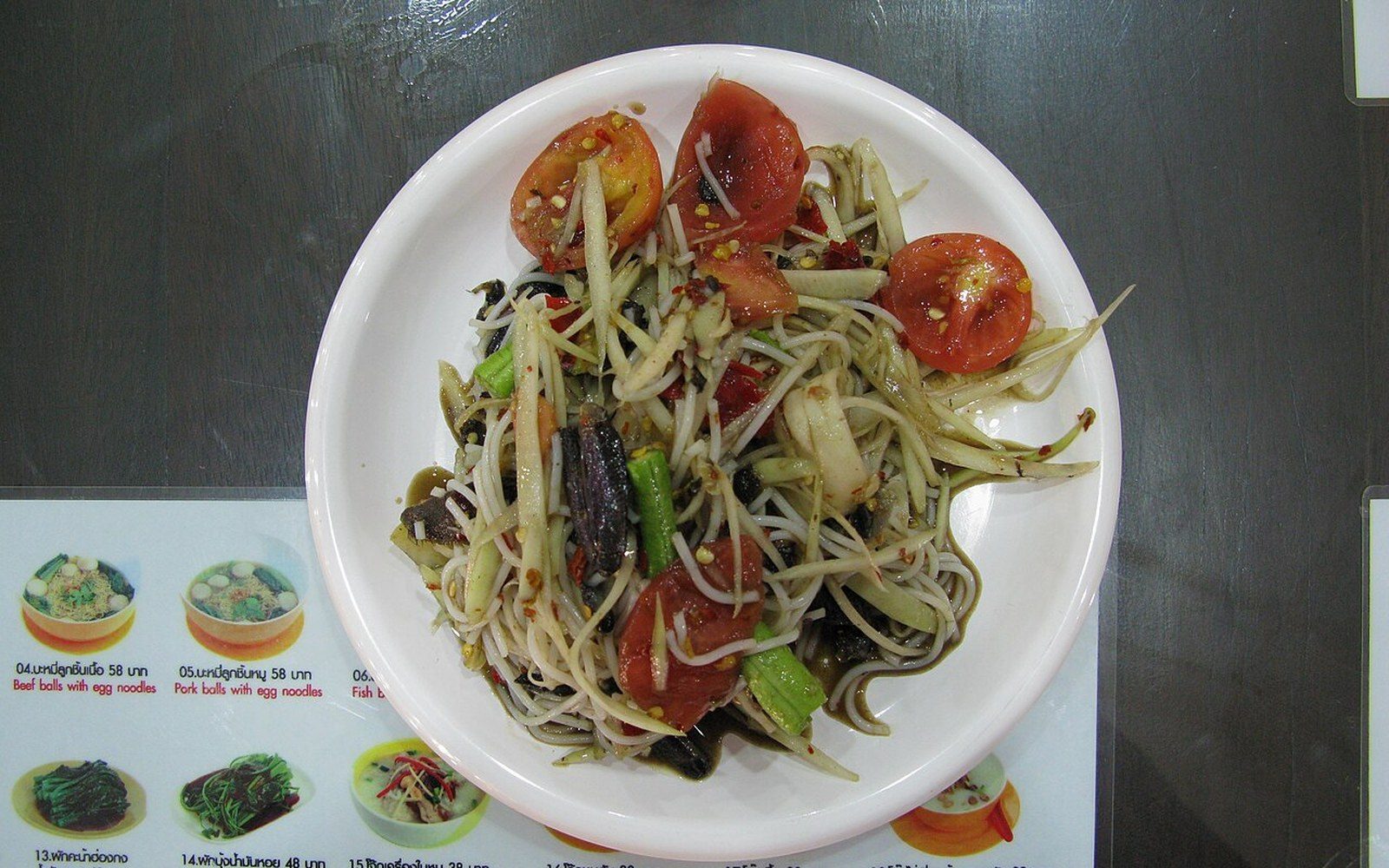
The cuisine of the northeast is built around sticky rice — khao niao — glutinous and hand-rolled into small balls, eaten with everything. Beside it sits som tam, a green papaya salad pounded in a clay mortar with dried shrimp, palm sugar, lime, fish sauce and fresh chilli. The version most Bangkok Thais eat daily is som tam Thai, relatively balanced; the Isaan original, som tam poo, is sharper and includes fermented field crab, whose smell and intensity are not negotiated. The distance between the two is the distance between a food that has been mediated for a new audience and one that hasn't.
Alongside the salad comes grilled meat: gai yang (grilled chicken, marinated in lemongrass, garlic and coriander root before it goes over the coals) and moo ping (pork skewers), both cooked over charcoal on roadside grills that need no more infrastructure than a rack and a bag of coal. Laab — minced pork or beef dressed with toasted rice powder, lime, fish sauce and fresh herbs — and nam tok, its near-relative made with sliced grilled beef, complete the core of what most Bangkok residents now regard as simply available food, not regional food.
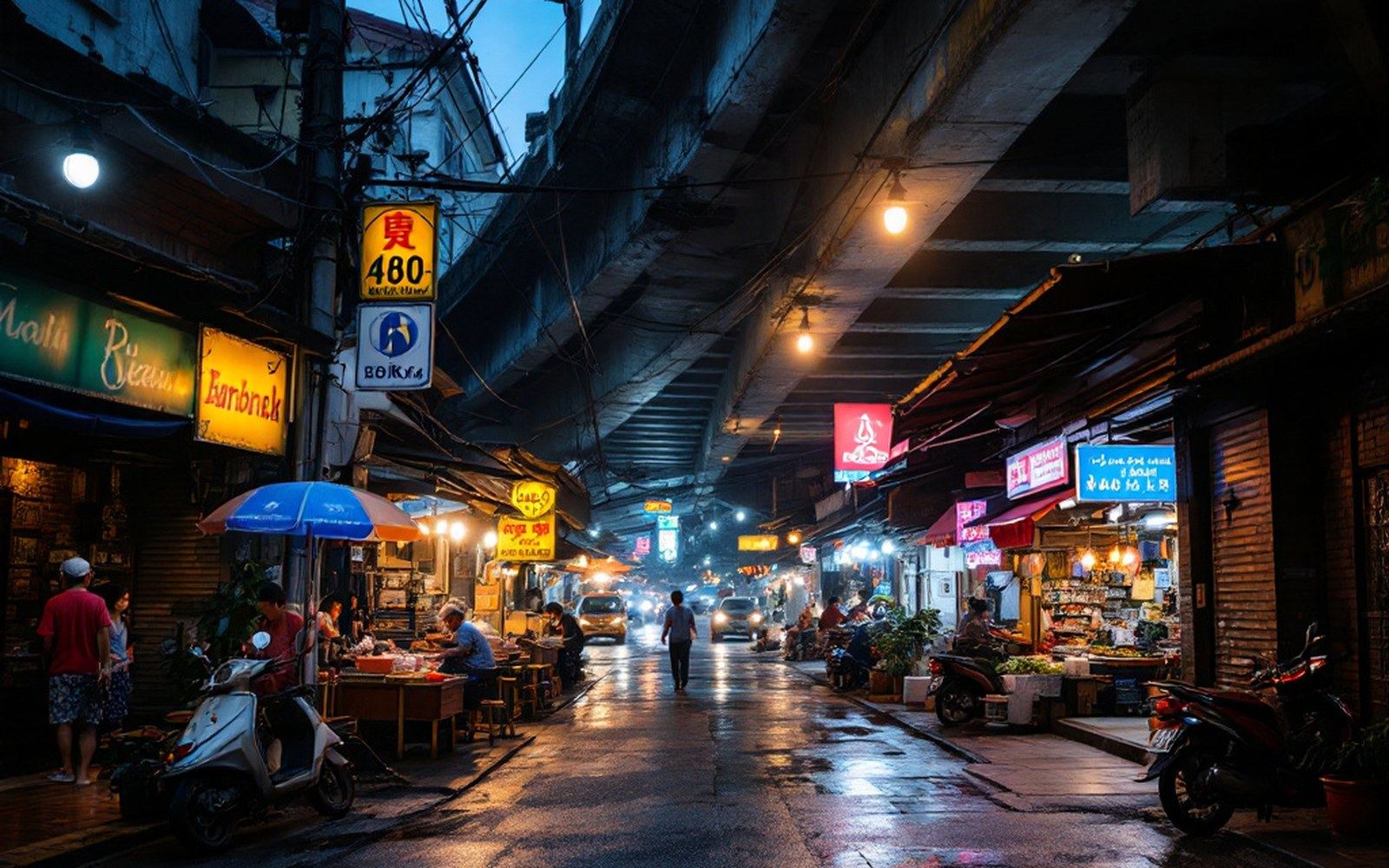
The cooking is fundamentally portable. It requires a mortar, a grill, and ingredients that are cheap and non-perishable. The pavement stall in front of a shophouse on a Bangkok soi is structurally identical to one outside a village market in Roi Et. This is part of why the food travels so successfully: there is no elaborate mise en place, no specialist equipment, no long apprenticeship in a restaurant. A family that has always cooked this way can cook it anywhere.
Ordinary Rather Than Regional
What happened over two or three generations is that Isaan food stopped being marked as northeastern and became, for most Bangkok residents, simply food. The som tam cart is as unremarkable on a central Bangkok street as a sandwich counter in a European office district. The early-morning moo ping vendor — charcoal lit before six, skewers ready for workers on their way to sites or offices — is urban infrastructure. This is how the food of a migrant community tends to move: not through restaurants claiming authenticity, but through the daily momentum of people feeding themselves and then feeding whoever is nearby.
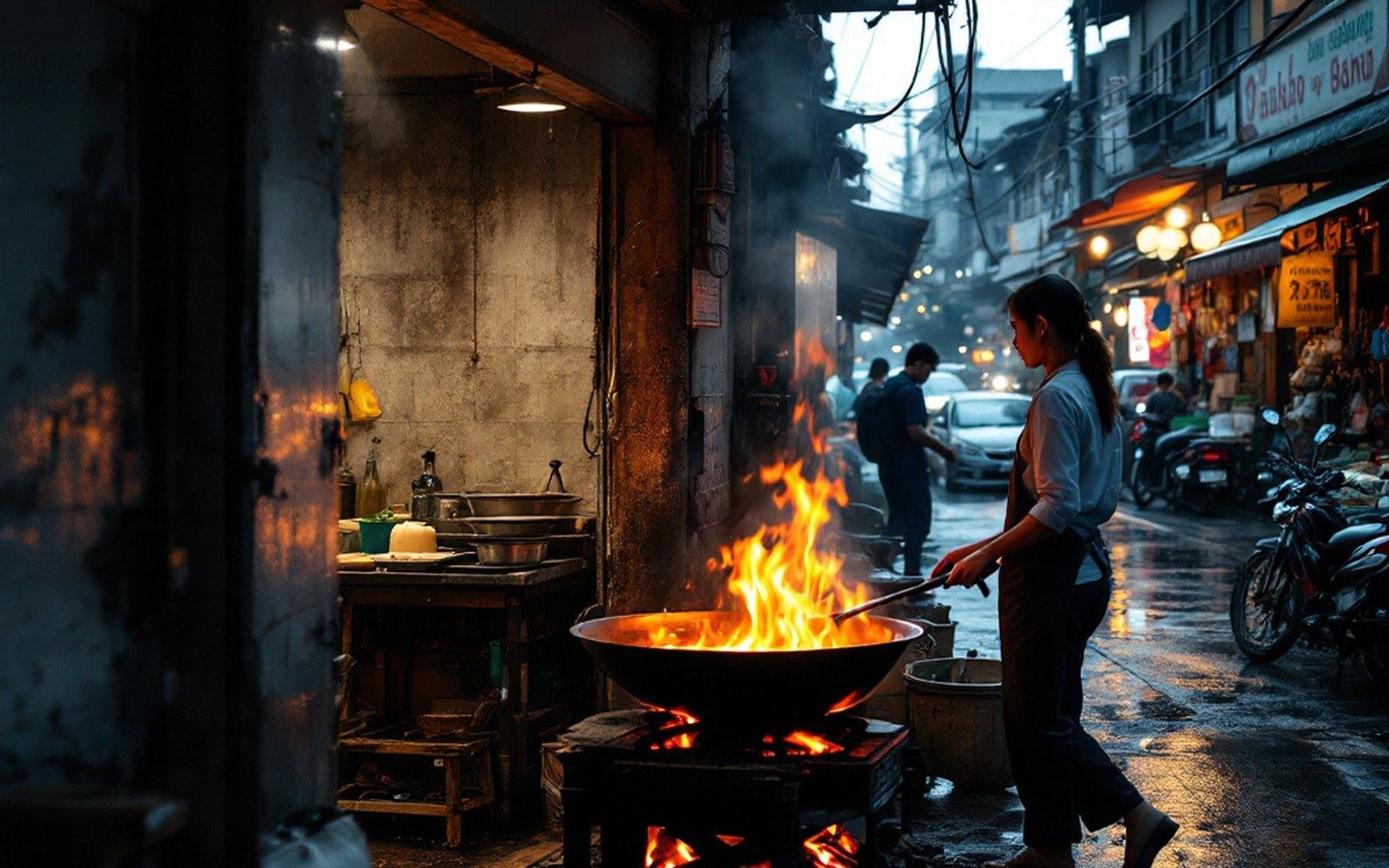
Jay Fai's shophouse on Maha Chai Road represents one extreme of Bangkok's street food — singular, expensive, awarded. The Isaan grill on the pavement outside a construction hoarding represents the other: unremarked, unremarkable, entirely essential. Both are real. The latter feeds incomparably more people, and it arrived in the capital not as a culinary statement but because the people who cooked it were there, and they were hungry, and the capital was hungry too.
Related
The food is regional and the regions argue