A street stall got a star and the queue changed shape
The cooking at Jay Fai's shophouse on Dinso Road has not changed since Michelin arrived in 2018. The queue has.
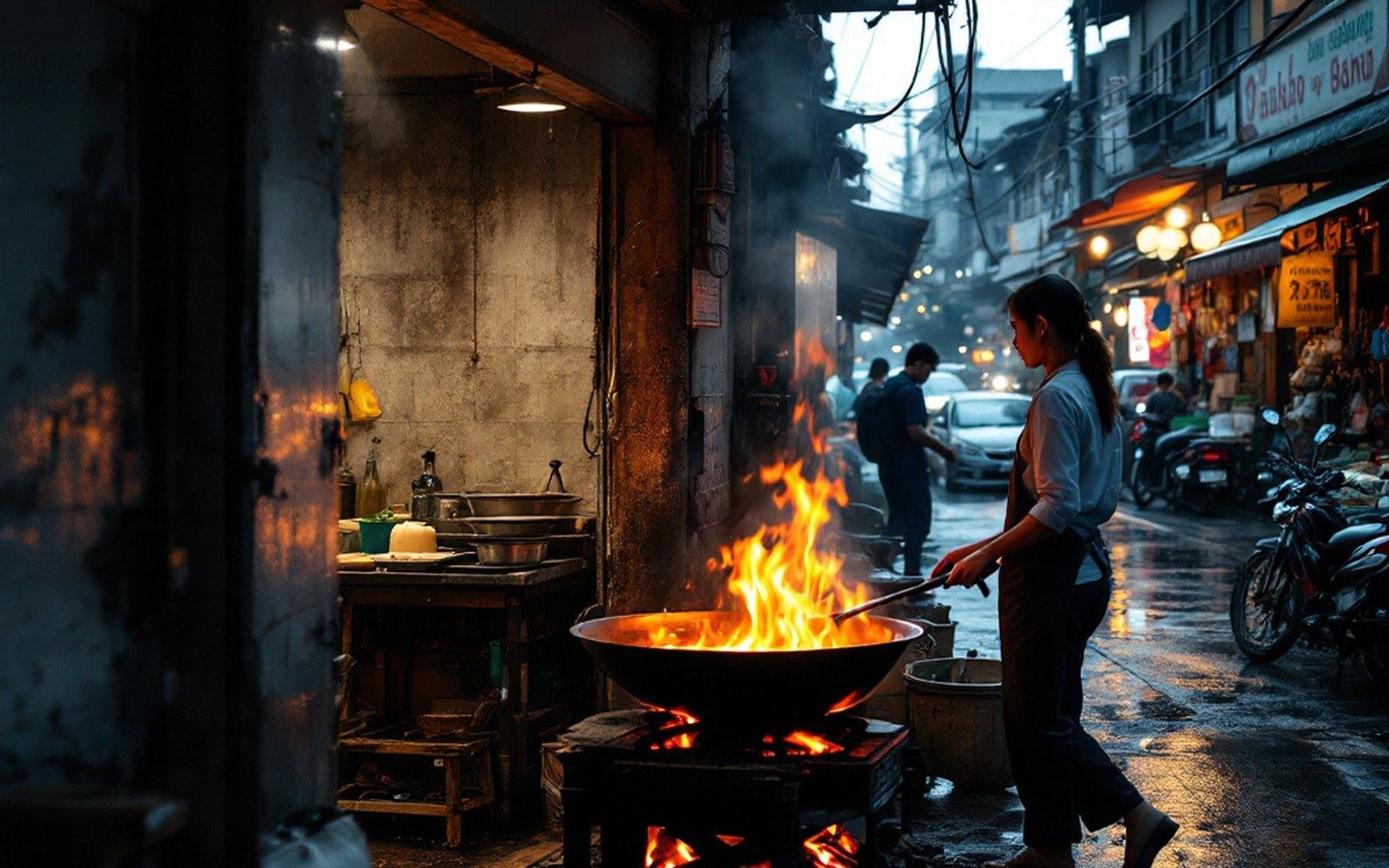
The kitchen on Dinso Road
Jay Fai — born Supinya Junsuta — has cooked at the same charcoal-fired station on Dinso Road, in Bangkok's old city, for decades. The setup is unchanged: two woks over live coals, a pair of goggles against the smoke and oil, and a menu built around seafood. The crab omelette, the drunken noodles, the dry tom yum — all made to order, each one timed by the cook herself rather than by a brigade. She works alone on the fire.
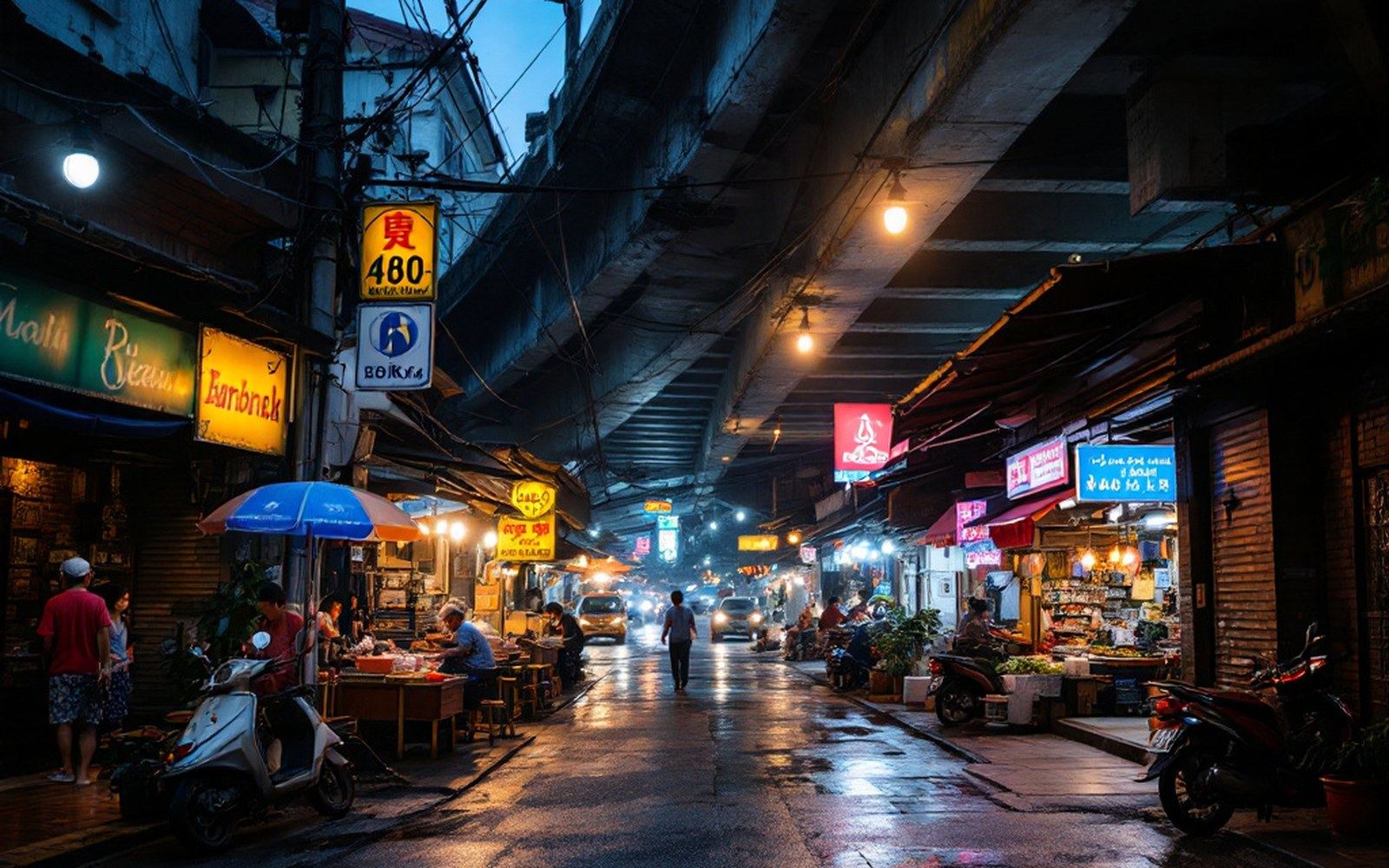
When the inaugural Thailand Michelin Guide awarded the stall a star in 2018, it was one of the first street-food operations anywhere in the world to receive one. The announcement landed alongside a handful of other Bangkok entries, but the Dinso Road shophouse — a narrow two-storey building with plastic chairs and a charcoal smell that reaches the pavement — became the image that travelled internationally.
What the star changed, and what it did not
The food stayed exactly where it was. Jay Fai has cooked the same dishes for the same reasons: the crab is bought whole, the eggs are cracked fresh, nothing is pre-prepared. What changed was the composition of the line outside. Before 2018, it was a neighbourhood institution — known to Bangkok food writers and to the city's own appetite for a cook who had survived decades of charcoal smoke and rising rents. After 2018, it became a destination in a category that includes restaurants on multiple continents, and the queue began to fill with people who had flown in.
The shophouse format — narrow frontage, ground floor given over to the kitchen and a few tables, the cook visible from the street — is common to the older commercial strips of Bangkok. Charoen Krung has them, Yaowarat has them, the lanes around the Democracy Monument have them. What the format does not do is scale. Jay Fai cannot send a second cook to the second wok because the woks are Jay Fai's. The result is a waiting time that became, in the years after the guide's publication, a subject of its own: documented by visitors, discussed on food forums, eventually long enough that the shophouse moved to a reservation system, which is itself an unusual thing for a place with plastic chairs.
The Michelin distinction carries a specific implication: the inspector visited anonymously, more than once, and judged consistently. For an operation this small — one cook, two woks, a charcoal fire — that process produces something stranger than it does for a formal restaurant. The criteria include quality of ingredient, cooking technique, consistency and personality of the cooking. All of those were present on Dinso Road before any inspector arrived; the star made them legible to an audience that reads the guide.
The shophouse as kitchen
The shophouse itself is worth attention as a building type. A Thai shophouse is typically a terrace of two or three storeys, ground floor commercial and upper floors residential, built to a party wall on both sides. In Bangkok's older districts the form dates to the nineteenth century and is associated with the Chinese merchant community that settled along the river and its klongs (canals). The kitchen at the front, the family behind and above: that arrangement was the city's commercial grammar for generations.
Jay Fai's shophouse is that grammar unchanged, except that the person behind the woks became, late in a long career, one of the most written-about cooks in Southeast Asia. The goggles — worn since early in her cooking life, against the heat and smoke of the charcoal — became, in photographs taken after 2018, an instantly recognisable image: an older woman at a live fire, smoke rising, tongs in hand, apparently indifferent to the distance the world had suddenly closed to watch her work.
The queue is longer now. The cooking is the same. That is, depending on who is waiting, either a vindication or an inconvenience — and in Bangkok, usually both.
Related
The food is regional and the regions argue