The River Gets One Night of Floating Lights
On the twelfth lunar full moon, every canal, river and pond in Thailand receives a small decorated float. The water holds them for as long as it takes.
The night of the float
Loi Krathong — loi meaning to float, krathong meaning the float itself — falls each year on the full moon of the twelfth month of the Thai lunar calendar, which places it in November by the solar reckoning. The date shifts annually, as lunar calendars do, but the logic is consistent: it arrives at the end of the rainy season, when rivers run high and the monsoon has just relinquished its grip on the country.
The krathong is a small vessel, traditionally made from a cross-section of banana trunk topped with folded banana leaves, flowers, incense sticks and a candle. Some contain a coin, a nail-clipping or a lock of hair — the idea that the float carries something of the person away with the current is old and persistent, though the precise pre-Buddhist origins of the festival remain debated by scholars. What happens on the water is unambiguous: after dark, the surface of the Chao Phraya, every klong (canal), and every catchment pond across the country fills with these small lit things drifting outward.
In Bangkok, the riverbanks at Wat Arun and Wat Pho draw crowds for the full spectacle of krathong reaching the main current. Ayutthaya, where the festival is thought by some historians to have earlier, grander ceremonial roots at the old capital, holds its own observance among the ruins, the floats moving between broken temple walls and the dark bulk of surviving prangs. There is something pointed about that geography: water was always the medium that Ayutthaya moved in, and the festival finds its most concentrated atmosphere where the city was.
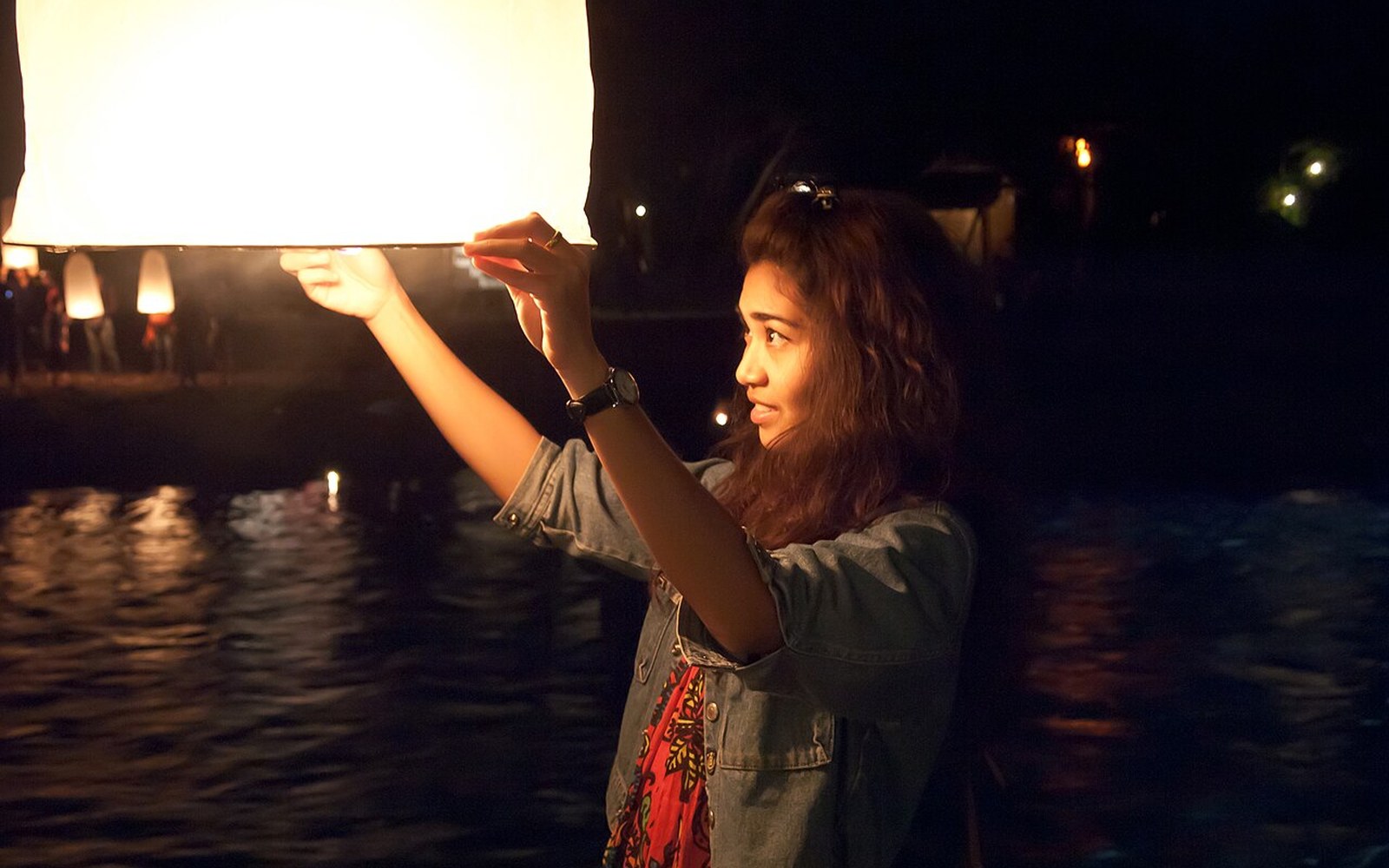
In the north, Loi Krathong runs alongside a separate but simultaneous festival: Yi Peng, the Lanna tradition of releasing paper lanterns — khom loi — into the night sky. Chiang Mai is the centre of this; the lanterns rise on the same evening the floats go out, so the sky and the water are lit together. The two festivals are distinct in origin and the north keeps them distinct in name, even though outside Thailand they are frequently collapsed into a single image of floating light.
The ecological cost of the festival has attracted sustained attention. Polystyrene and synthetic-material krathong — cheaper and longer-lasting than banana trunk — accumulated in Thai waterways in significant quantities, and several municipalities and environmental groups have since campaigned for a return to fully biodegradable materials. Bread-based krathong, which fish can eat, became one proposed answer. The argument is ongoing.
Related
The things a visitor notices before anyone explains them