The underground got built anyway, and it cost more
Bangkok got two rail systems because one city needed both: the BTS rode above the traffic on a viaduct, and the MRT dug below it through waterlogged alluvial soil at a price that reflected exactly how difficult that was.
Why the ground won the first argument, then lost the second
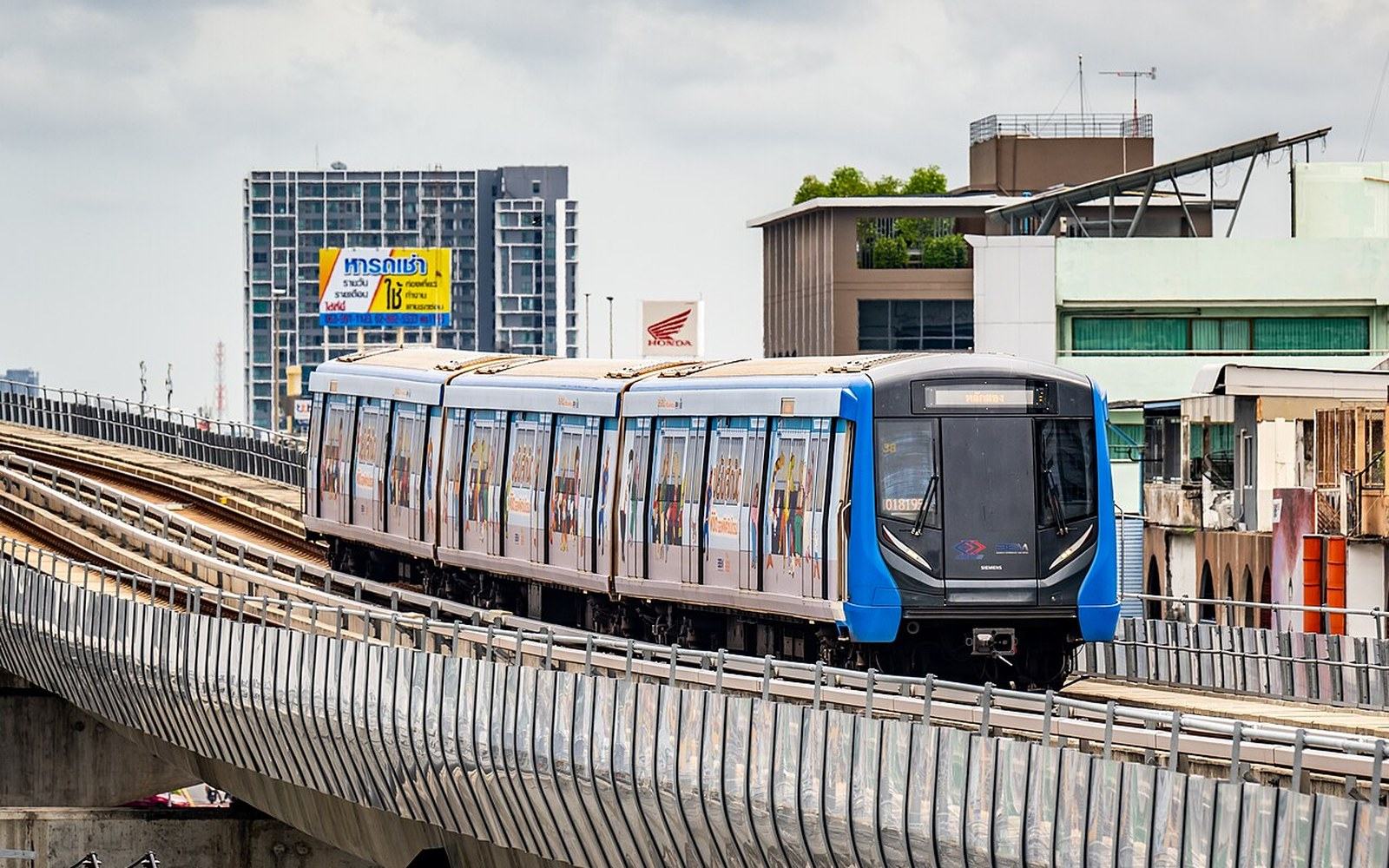
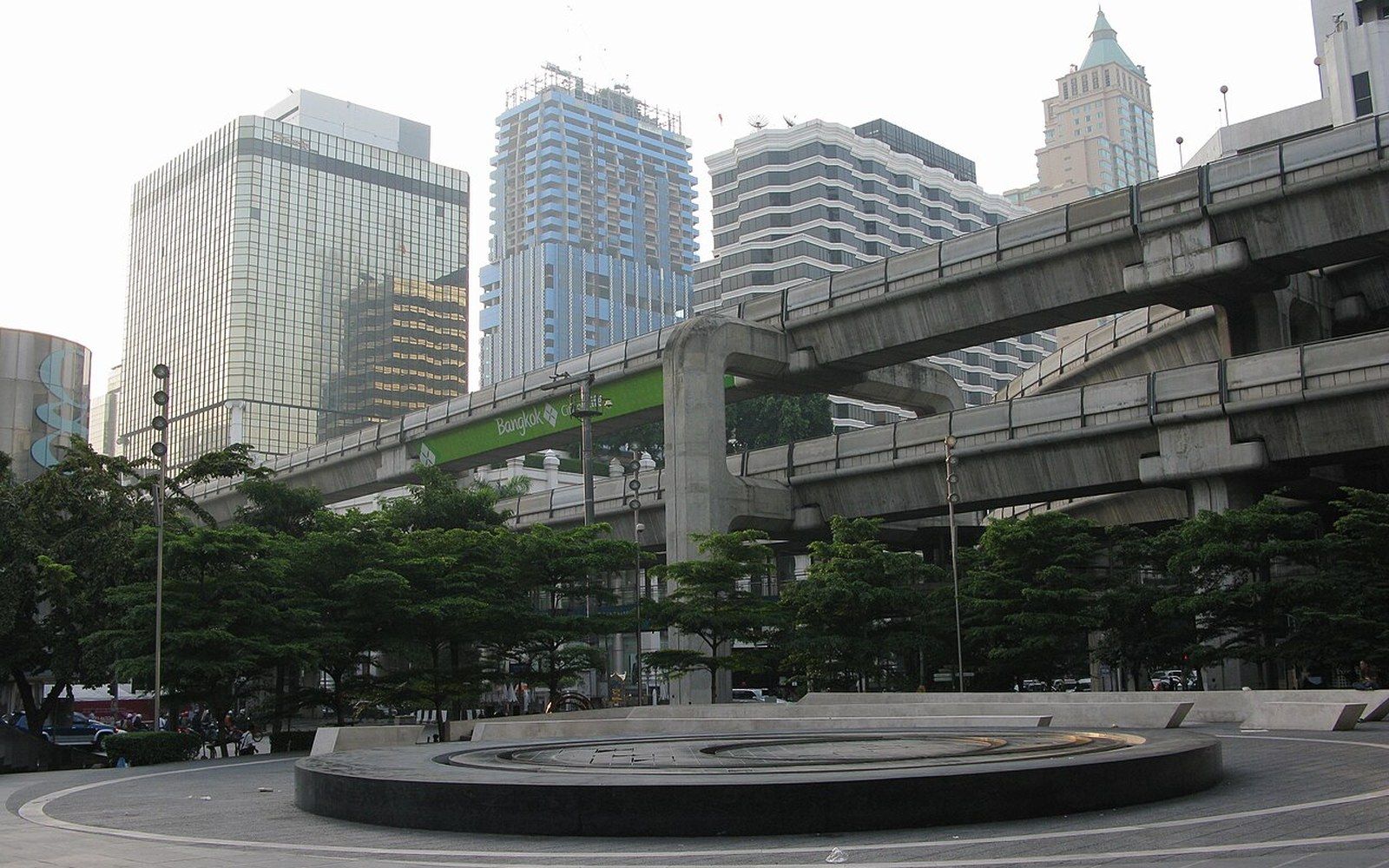
When the BTS Skytrain opened in 1999 on a viaduct above Sukhumvit and Silom, the choice of elevation was not aesthetic. Bangkok sits on the delta of the Chao Phraya, built on clay and sediment that shifts under load and drains badly. Tunnelling through it required pressurised shields, continuous groundwater management, and a standard of engineering that, in the 1990s, the city was not yet prepared to finance at the scale a central subway would demand. So the elevated option came first.
The MRT — the Metropolitan Rapid Transit — came five years later. Its Blue Line opened in July 2004, running roughly twenty kilometres from Hua Lamphong in the south to Bang Sue in the north, with eighteen stations threading under the city centre through the same soft ground the Skytrain's planners had decided to go over. The cost per kilometre was substantially higher than the elevated system: boring through clay, depressurising tunnels, underpinning existing foundations along the route, and managing the constant risk of subsidence made it so. Bangkok was also subsiding at measurable rates in the late twentieth century from groundwater extraction — some estimates placed parts of the city sinking by centimetres per year during the decades of heaviest industrial pumping — which made the engineering tolerances tighter still.
What made it possible when it had seemed impossible, or at least unaffordable, a decade earlier was a combination of committed public financing, international contractors with the relevant experience, and a political decision that the city's centre — Silom, Sukhumvit, the area around Lumphini — could not be served exclusively by elevated lines whose stations demanded street-level transfers. Underground stops could be placed where the pedestrian logic demanded them, beneath intersections that an elevated station would have overflown.
The engineering solution used earth pressure balance tunnel boring machines — mechanised shields that manage the face pressure of soft ground continuously, reducing settlement at the surface. The method was well-established in comparable delta-soil cities such as Amsterdam and Singapore, and Bangkok drew on that accumulated practice. Stations were built using cut-and-cover construction where depth and surface disruption allowed it, and bored tunnelling elsewhere. The disruption to Sukhumvit Road during construction was considerable and lasted years.
The two systems opened without integration. A passenger moving between a BTS station and an MRT station at Asok — where the Sukhumvit BTS platform and the Sukhumvit MRT station occupy the same junction but different organisations — paid two separate fares and walked a covered transfer passage between them. The systems used different smartcard standards, different operators, and different fare structures. That separation was a political and commercial fact as much as a technical one: the BTS was operated by Bangkok Mass Transit System, a concession of Bangkok Metropolitan Administration, while the MRT was run under a different concession by the Mass Rapid Transit Authority of Thailand, a state enterprise. Two agencies, two fare gates, one city.
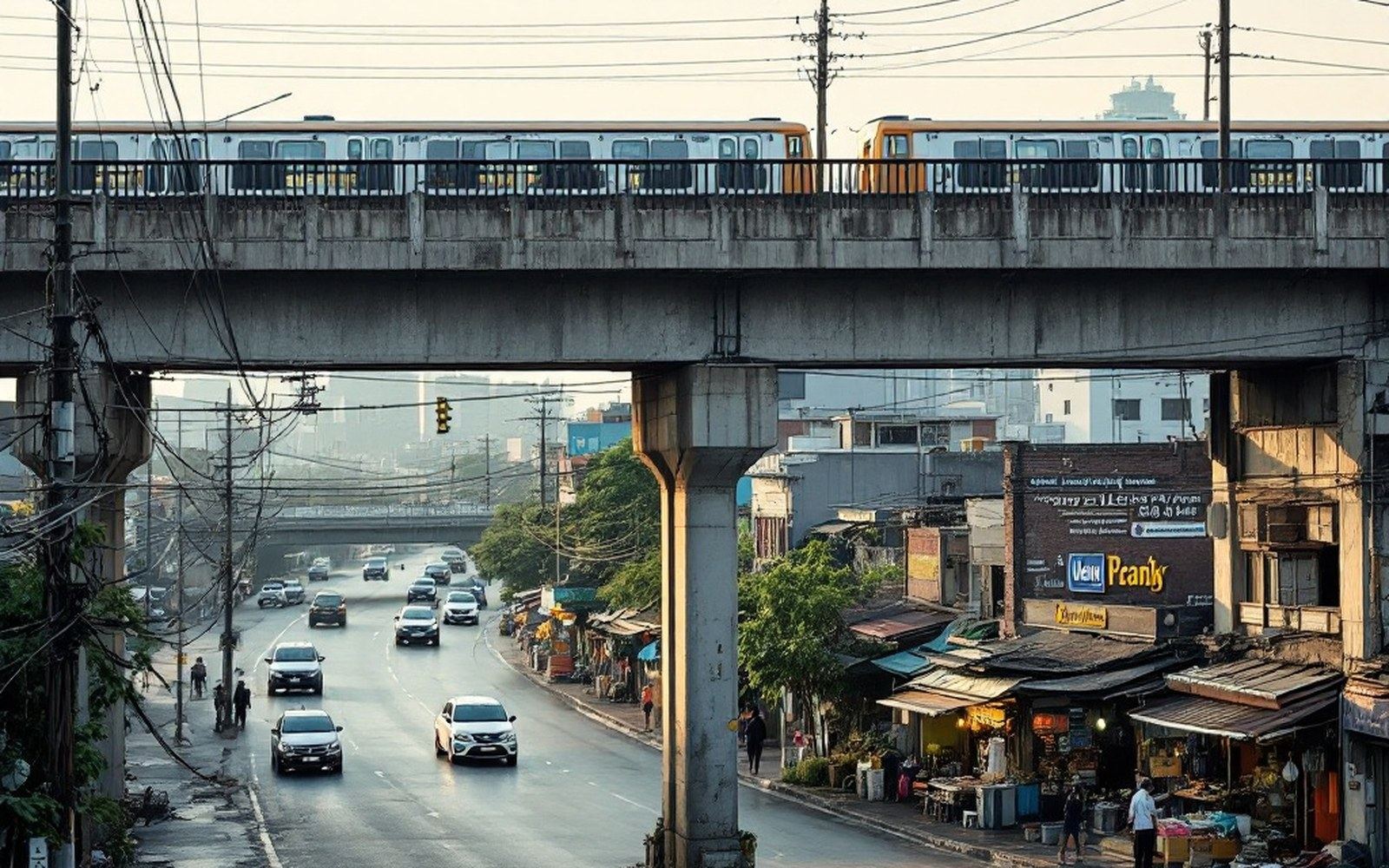
The MRT expanded significantly through the following two decades. The Blue Line was extended in sections to form an almost complete loop beneath and around much of inner Bangkok, crossing the Chao Phraya to reach Thonburi on the western bank. The Yellow Line and Pink Line, elevated monorails rather than subways, added further orbital routes. Each addition carried its own financing structure, its own construction timeline, and its own arguments about ground conditions, cost, and who would ride it.
What the original 2004 line demonstrated was that Bangkok's soft ground was an obstacle to underground construction, not a prohibition. It cost more to go beneath the city than above it. The city went beneath it anyway.
Related
A city that could not dig, so it built upward