The malls grew until they touched the platforms
Bangkok reorganised its ground floor: the Skytrain came, the walkways followed, and the city's commercial centre of gravity shifted upward.
A city that learned to live above itself
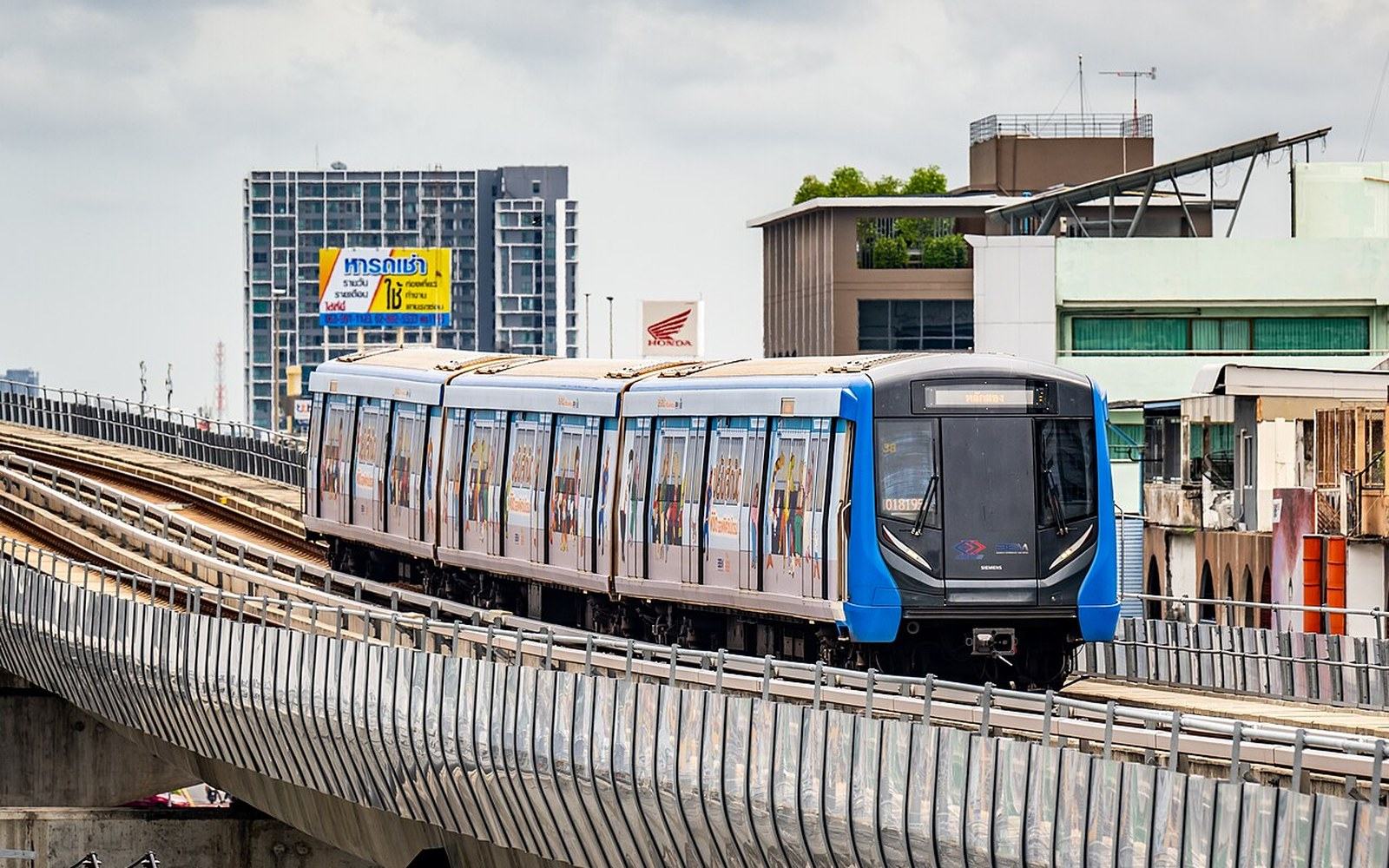
When the BTS Skytrain opened in 1999 on its viaduct above Sukhumvit and Silom, the immediate effect was transit. The secondary effect — longer, stranger, still unfinished — was architectural. Bangkok's major shopping centres began connecting their upper floors directly to station concourses by enclosed walkways, and a new kind of urban ground floor quietly came into existence several storeys above the street.
The logic was straightforward. Bangkok's heat and humidity make walking any distance outdoors genuinely punishing for much of the year, and the BTS deposited large volumes of passengers in commercial corridors — Sukhumvit, Siam, Ratchadamri — where development had been accumulating since the Charoen Krung era pivoted inward and upward. Developers who built above the flood-prone alluvial plain had already learned that air-conditioned interiors were more attractive than street frontage. A direct linkage to train traffic was the obvious next step.
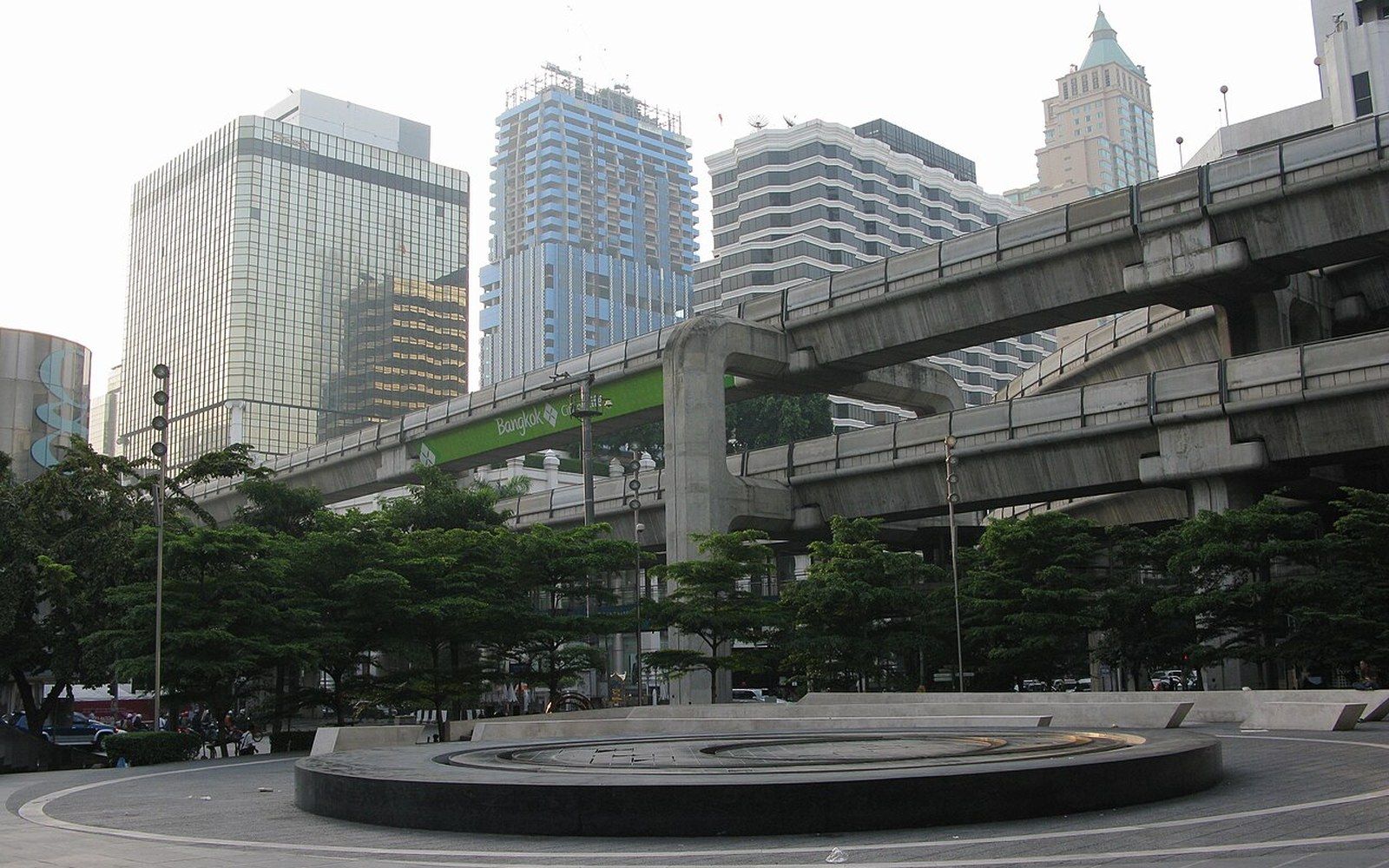
The result, most legible at Siam station, is a pedestrian network that rarely requires descent to street level. Siam Paragon, CentralWorld, Siam Center and Siam Discovery are all accessible from platforms or elevated walkways without touching the pavement. A passenger can arrive at Siam — the BTS's only interchange between its two original lines — from Mo Chit in the north or On Nut in the east, and walk between half a dozen major retail buildings while remaining in conditioned air. The distance covered is substantial; the discomfort is minimal. This is a deliberate outcome, not an accident of adjacency.
What the walkways changed
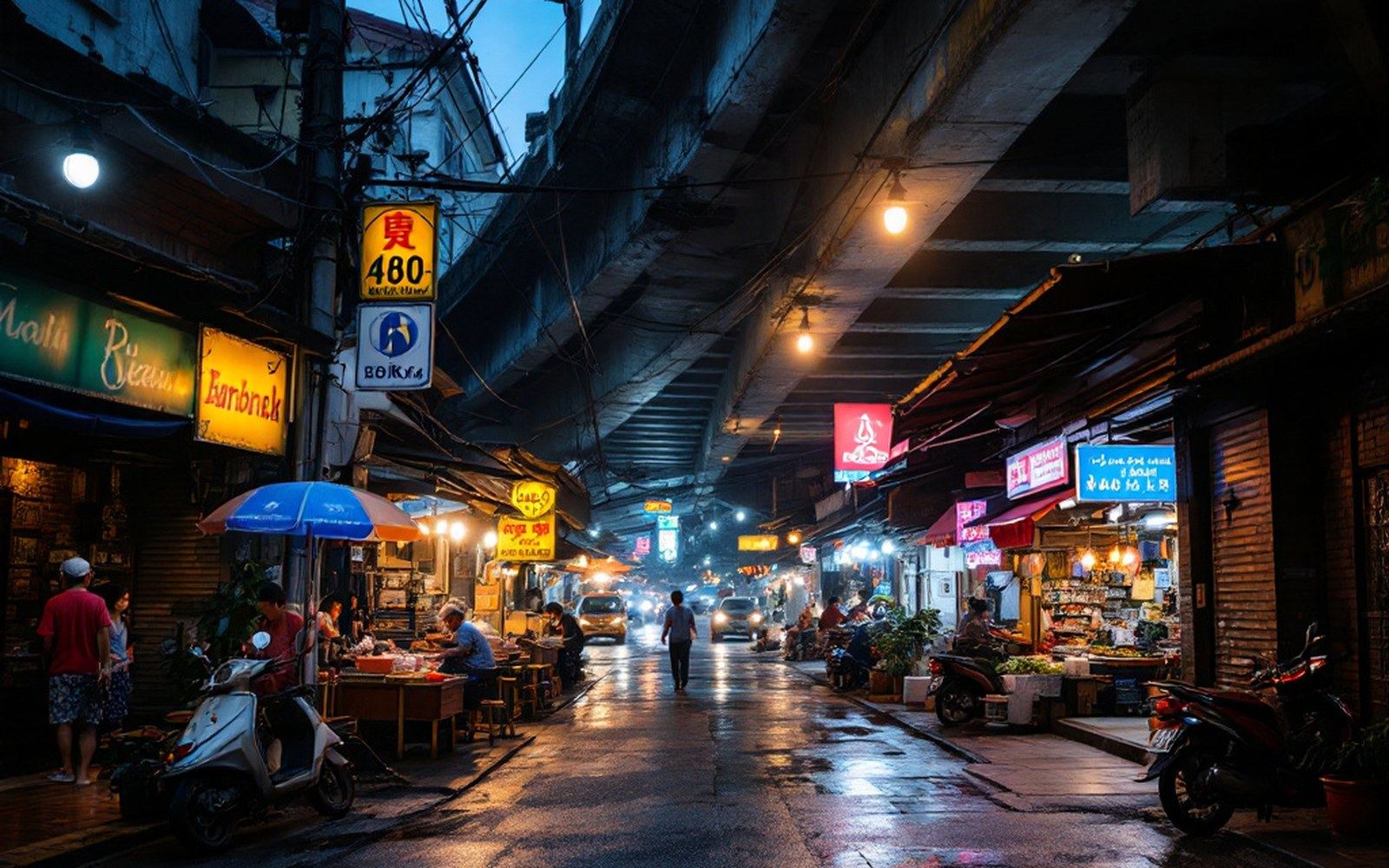
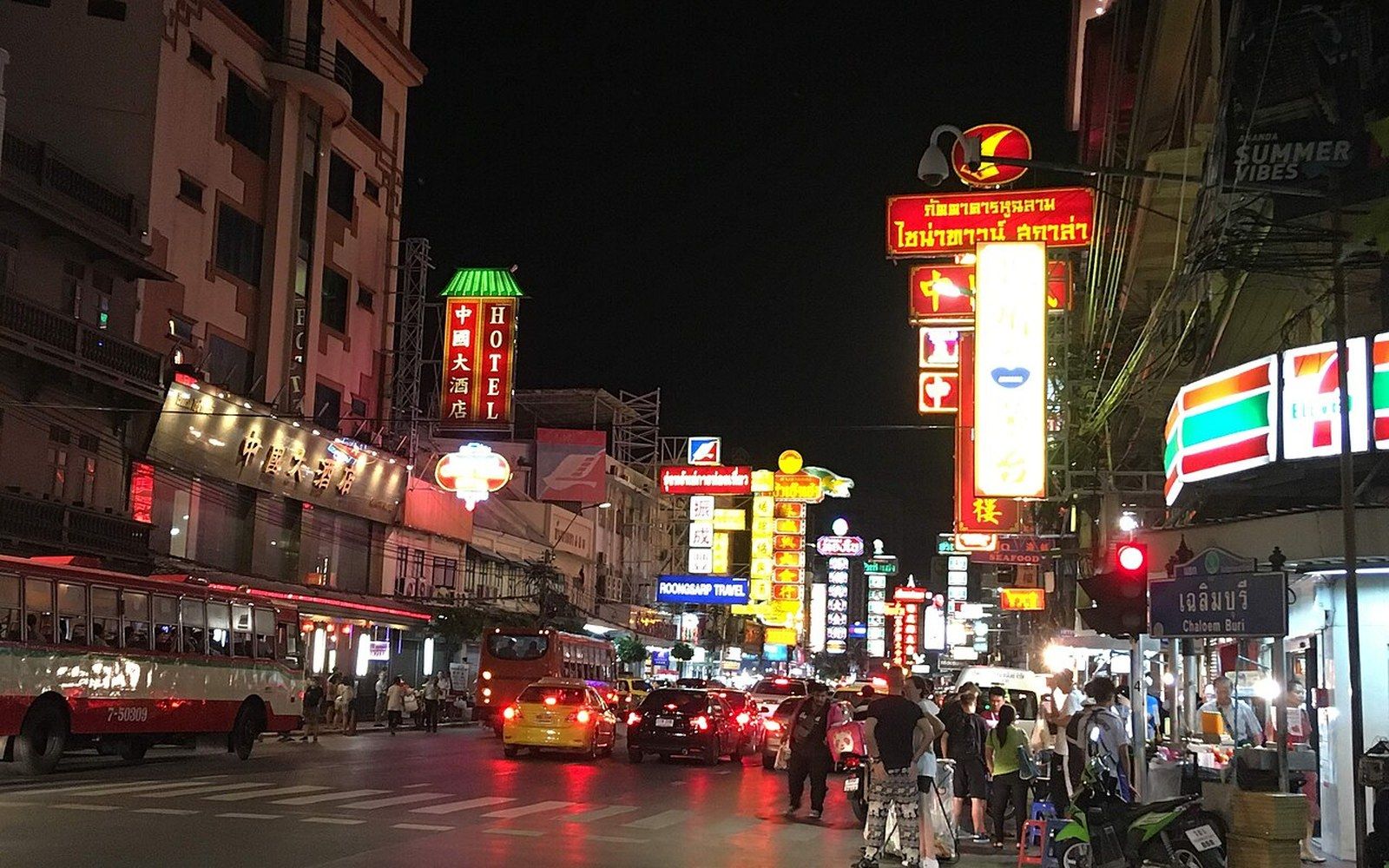
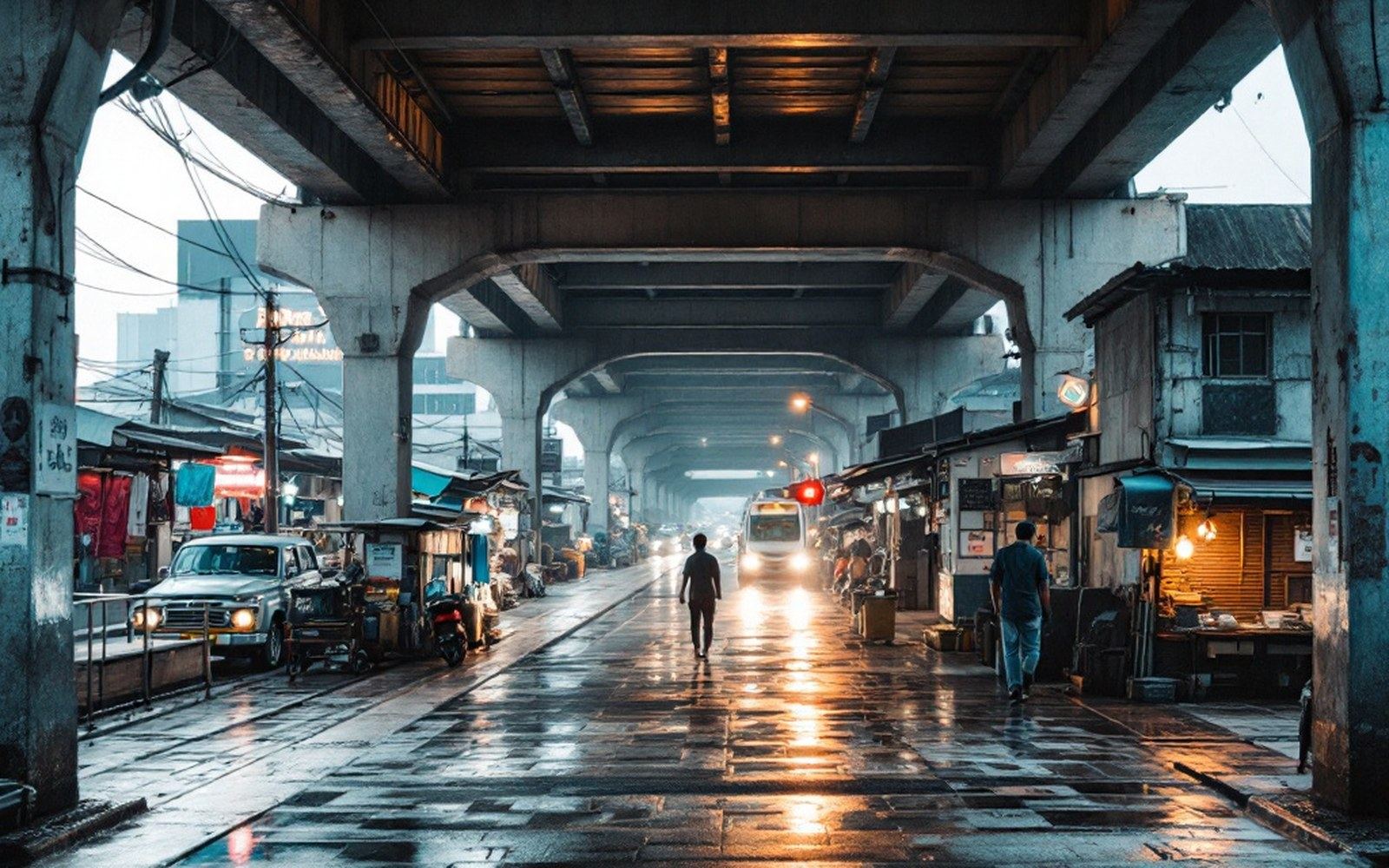
At street level, the transformation is visible in negative. Roads like Ratchadamri and the upper section of Sukhumvit still carry traffic and the vendors and food courts that predate the BTS era, but they operate in a different economy from the elevated circuit above them. The pedestrian mass that once threaded the pavement now arrives by train, moves through the walkways, and returns the same way. Some street-level retail — particularly around Asok and Phrom Phong stations — has adapted by sending signage and escalators upward to catch passengers at the sky bridge entrance rather than the ground-floor door.
The malls themselves have engineered for the connection. Terminal 21, at Asok, is explicitly organised around an airport theme, with each floor assigned a different international city, a design choice that makes sense for a building whose primary entry point is an elevated walkway from two converging train lines — the BTS and the MRT — rather than a street frontage. IconSiam, which opened in 2018 on the Thonburi bank of the Chao Phraya and lacks a direct BTS connection, responded by building its own shuttle-boat service from Saphan Taksin station, extending the principle by river rather than walkway.
What the network does not do is resolve Bangkok's spatial inequality. The elevated commercial circuit serves the middle and upper-middle Bangkok of department stores and food courts with imported goods; the street below it — the klongs-become-roads, the older shophouse blocks, the pushcart kitchens — runs on a different rhythm entirely. The two floors coexist without fully connecting, separated less by distance than by the economic and climatic logic that built the walkways in the first place.
The BTS network has expanded considerably since 1999, and with each new station the question of walkway connections returns. Not every extension generates the same density of commercial linkage — suburban stations do not attract the same footprint — but the model is established. Bangkok now has a tier of the city that sits between the pavement and the sky, with its own internal geography, its own weather, and its own version of what a street is.
Related
A city that could not dig, so it built upward